16th September 2025
Conwy RSPB reserve / Llandudno Great Orme
Nine members took part in the first mid-week trip of the MCOS season. Meeting at the car park at 10am the weather was damp and grey with a strong breeze but improved through the day with a bright and sunny afternoon.Water levels on the reserve were very low and the shallow lagoon opposite the visitor centre was completely dried up with a consequent lack of birds. More successful was the view from the Tal-y- fan hide where we had an excellent close up of three curlew sandpipers plus a black tailed godwit, snipe, lapwings and about 100 redshank.Moving onto the Carneddau hide the highlight was about a dozen little grebes, otherwise species numbers were fairly disappointing.
The grey heron trail around the edge of the reserve was closed for reed burning so we took the Ganol Trail to the River Conwy which gave us a goldcrest and chiffchaff. The tide was out on the estuary and birds on the mudflats included curlew, oystercatcher, little and great white egrets and overflying swallows and house martins.
Returning along the river path to the car park we had lunch outside the cafe during which time we had a flypast by a great spotted woodpecker, a buzzard and two wheatears very obligingly landed on the roof of the visitors centre.
Following lunch five of us moved onto Great Orme near Llandudno and enjoyed a walk from the car park up to the limestone pavement now in glorious sunshine. Bird highlights were a total of 6 stonechats, a raven calling and a small flock of chough.
Overall an excellent day and a total of 49 species - a good start to the new birding season.
- Ged Petch

17th - 19th October 2025
East Yorkshire
Our first weekend trip of the new season was a 3-day trip on the 17th – 19th October, when 16 members travelled across to East Yorkshire. We stayed at The Revelstoke Hotel in Bridlington again, and as last year we were well looked after by all the friendly staff, with good food and excellent company.
We travelled over the M62 to Yorkshire on the Friday morning and met mid-morning at North Cave Wetlands, just off the end of the motorway. This is a fine reserve belonging to Yorkshire Wildlife Trust and we stayed for the morning, visited a couple of hides and highlights included Little Grebe, Marsh Harrier, Whooper Swan, Redshank, Snipe and Cetti’s Warbler. We had our lunch there; in fact some indulged in bacon barms and coffee from their excellent butty van. After lunch we made our way up to Flamborough Head, to the South Landing area. We saw a daytime roosting Tawny Owl being mobbed by Long-tailed Tit and Yellow Browed Warbler.
Further highlights in the ravine were Chiffchaff and Grey Wagtail and a walk down to the beach gave us Common Scoter, Purple Sandpiper, Grey Plover and Bar-tailed Godwit. Some of us moved to Thornwick Bay on the north side of the headland and the best birds were plentiful Gannet, Stonechat and Linnet. Everyone convened at the hotel to enjoy and excellent evening meal and some stayed up for the entertainment.
After an excellent breakfast on the Saturday, the group travelled to RSPB Bempton where a
Red-legged Partridge greeted us in the carpark. On the walk down to the cliffs, we had a very late Swallow. At the cliffs we saw many Gannets again together with Stock Dove, Kestrel and Fieldfare coming in off the sea. We moved back up to the visitor centre and highlights in the Dell included Ring Ousel, Tree Sparrow, Goldcrest, Redwing Fieldfare and Brambling.
After having lunch, we returned to South Landing on Flamborough Head where we again saw the Tawny Owl in the same roosting area (now looking a little sickly), and down at the beach, highlights included both Rock and Meadow Pipit, Stonechat, Red-throated Diver and Common Gull. The RNLI station have a cake sale on the Saturday and it would have been rude not partake, so some of us had a mid-afternoon brew and cake. Our final port of call on the Saturday was the headland. The majority of the group walked down to the fog station and were treated to a Merlin chasing Meadow Pipit. Some of us saw an Owl species coming in off the sea, later identified for us as a Long-eared Owl. Other highlights included Common Scoter, Shag, Guillemot and Red-throated Diver. Undoubtedly the highlight of the weekend for some of us was a pod of Bottlenose Dolphins (10+) who were travelling south past the headland and continuously breaching – a wonderful sight. One couple went back to Thornwick Bay and saw a hunting Barn Owl. Our evening meal was taken at the hotel again and a few of us stayed up again for the entertainment – one, no names, stayed up till the bitter end.
Another hearty cooked breakfast was the order of the day on the Sunday, and we said goodbye to all the staff at the hotel. We first went to North Landing (a Red Backed Shrike had been reported here the previous evening) but in a couple of hours it couldn’t be relocated and the highlights here included Skylark and the only House Sparrows of the trip. We moved up to the headland where in a couple of hours sea-watching we saw Gannet, Shag, Guillemot, Razorbill, Red-throated Diver and a drake Eider. We moved south then to Hornsea Mere. Our first bird on arriving was a Marsh Harrier quartering the reedbed and some of the earlier arrivals on the carpark saw a Glossy Ibis on the edge of the mere. Wildfowl was plentifulon the water and a scan gave us Shelduck, Wigeon, Teal, Goldeneye, Gadwall, Shoveler, Pintail, Pochard and Tufted Duck. Some of us saw the re[ported Scaup but not the drake Ring-necked Duck. The wind had picked up on Sunday morning and the surface of the water was quite choppy, plus the diving ducks were busy feeding. Where there is wildfowl in plenty, there is always raptors - no different this time with a juvenile Peregrine sat in a tree on one of the small islands.
We ended up with 96 species (more than last year) over the weekend. The weather was pretty good generally, some sunny intervals but no rain until we were leaving Hornsea on the Sunday afternoon – everybody travelling back in horrendous weather over the Pennines. Our accommodation was excellent with good food, both breakfasts and evening meals, good beer and entertainment. We didn’t see the rarities of last year’s trip but we were able to see migration in progress with hundreds of Blackbirds (some continental race), Redwings, Fieldfares and Ring Ousel dropping in especially at Bempton plus owls coming in off the sea. The highlight of the weekend was the pod of dolphins off Flamborough headland. Everyone enjoyed their weekend, birding together with lovely company. I’m sure the autumn weekend on the East coast is now firmly back on our calendar.
Ray Evans
28th October 2025
Pennington Flash
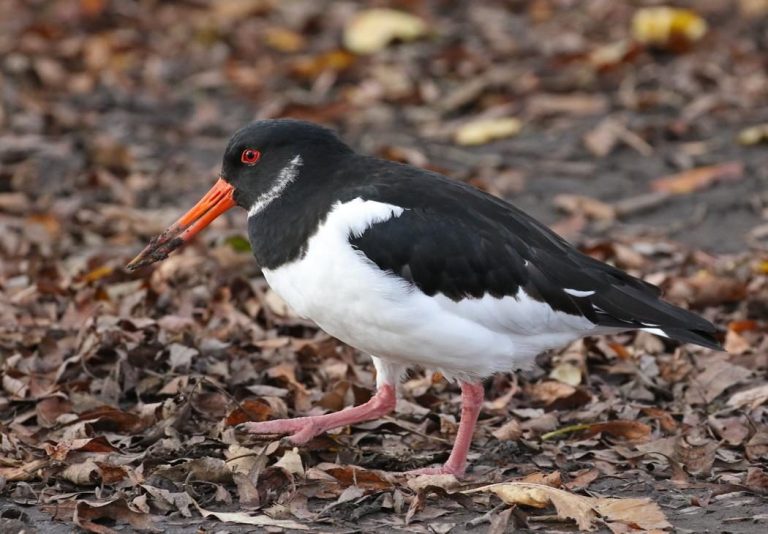
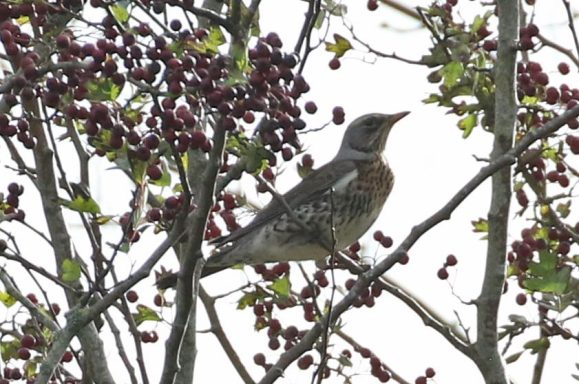
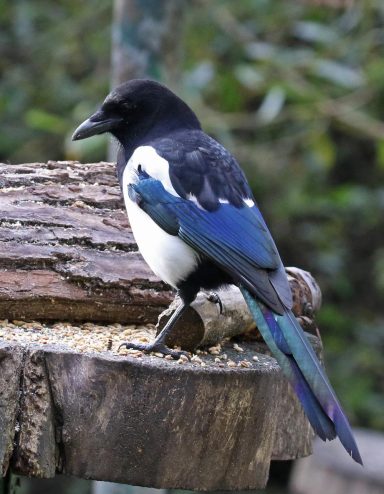
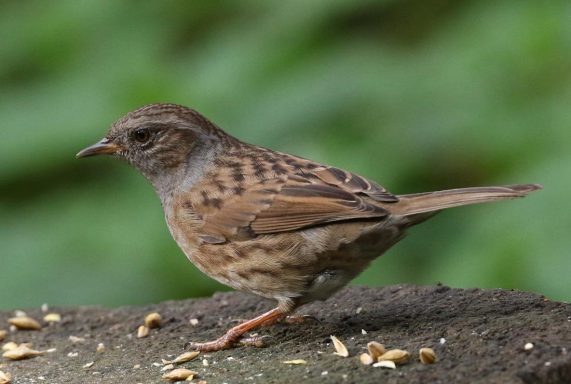
Thirteen hardy birding potterers met at the Pennington Flash car park around 10:00. The wind was blowing a hooly over the lake but the rain held off for a while. Around the shore was the usual gaggle of Canada Geese, Mallard, Black-headed Gulls, Mute Swans & a single isolated Oystercatcher.
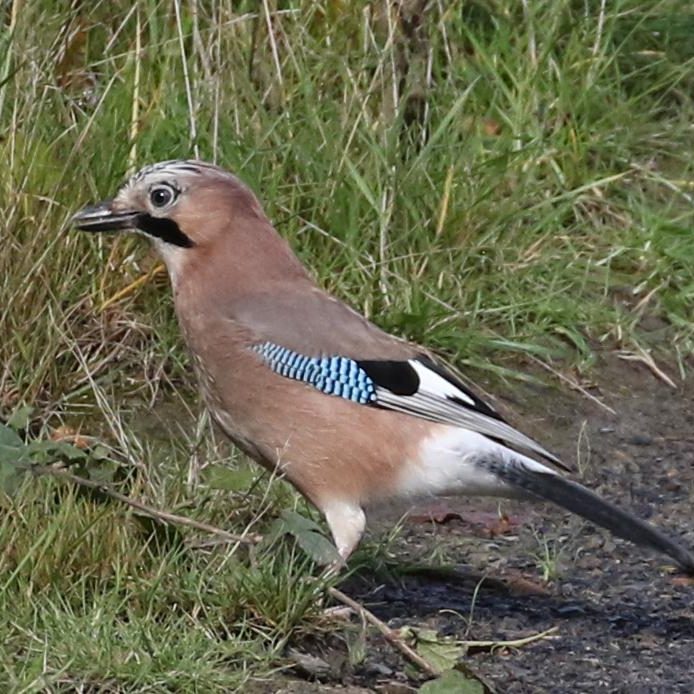
Across the lake were lots of Tufted Duck, Coot, and someone saw a Goldeneye. We then wandered off to the nearest Lakeside Hide where a lot of Cormorant were showing , together with a few Teal and Great Crested Grebes, and in the distance roosting Little Egret & a single Great White Egret. Further round the lake it inevitably started to rain, but looking back over the lake we had a great “discussion” about a little thin-necked bird in the distance. In the end, there were 3 of them and everyone decided they were Little Grebe! Further on again Simon spotted a Great Spotted Woodpecker & a Jay, and there were lots of Robin, Blue Tit, a Kestrel and a couple of crows
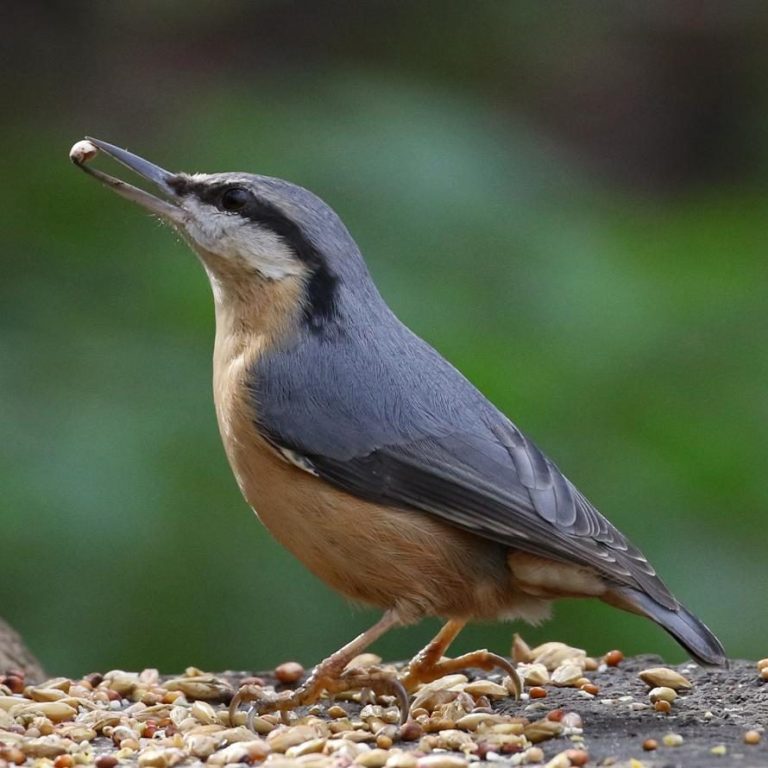
At the last hide, where there were feeding stations, we saw the usual array of Blue, Great & Coal Tits, Dunnock and a couple of lovely Nuthatches. By this time the rain had started again so we all strolled back to our cars and headed off for lunch. Many thanks to everyone for a very enjoyable day birding in our local area.
Andrew Aldridge
Photos by Simon Smith – many thanks.
9th November 2025
Leighton Moss RSPB reserve
Nine members met at the reserve car park for a 9.30 am start. Given the amount of rain and conditions members were advised to wear wellingtons. Greenfinches, Redwings, Robins and Goldfinches were all seen whilst waiting for people to be ready. Over to reception and then out to the feeders where the usual species were on the nuts along with a brief glance of a Marsh Tit. Cetti’s Warbler was heard from here and a pheasant paid us a visit. We then made our way to the causeway for possible Bearded Reedlings. The walk to the grit trays provided us with a calling Water Rail, Greylag geese overhead and Carrion Crows.
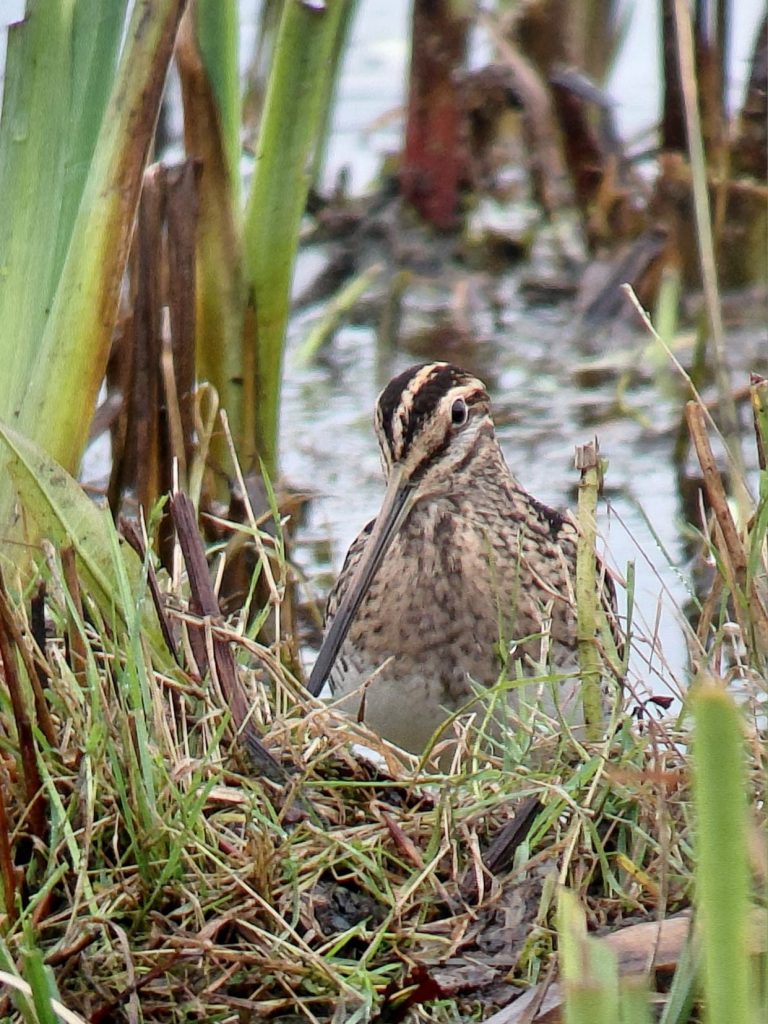
Bearded Reedlings were neither seen nor heard by us although some were seen early morning. Cetti’s were calling as was the occasional Water Rail. From the hide there was a distinct lack of ducks, mainly Gadwall, Coot, Teal and flying Shovellers present but we were treated to a couple of flypasts by a Kingfisher and Snipe and a female Marsh Harrier. High above the trees we saw Buzzard and Sparrowhawk.
The paths were submerged after this point so only a small number of the party continued to the revamped Lower Hide where wellies were required. Ray went to Lillian’s hide .The path from the causeway to Lower hide provided good views of Marsh tit (3), Treecreeper, Song thrush, Redwings, Bullfinch, Siskins Goldcrests and a Great Spotted Woodpecker. The return down the path provided good views of a Red Deer. Off to Lillian’s hide to meet up with Ray who had Little Grebe, Tufted duck , Pochard and Curlew plus a huge raft of Coot.
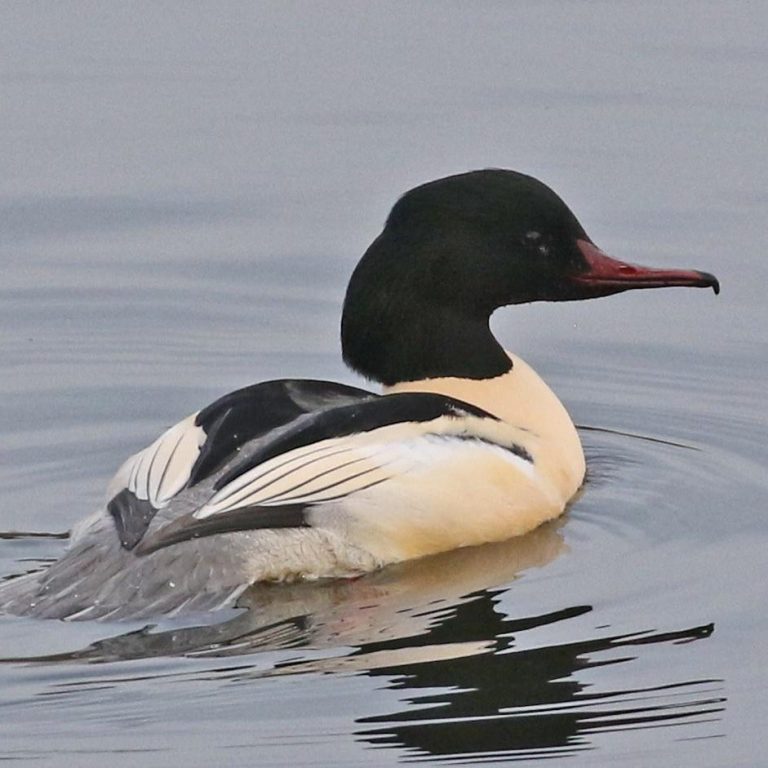
All had lunch in the car park and then off to Allen’s hide on the coastal side . We had Great and Little Egrets plus Oystercatcher , Wigeon, Curlew, Greenshank (4) and a large flock of Redshanks and Black Tailed Godwits. A single Dunlin here too. By now it was raining hard so off to Morecambe hide where we had distant views of Eider on the sea. Excellent views of a Male Merlin on a log plus Heron, Pintails (2m 2F) and several Red Breasted Mergansers.
A good day considering the conditions and a total of 58 species seen.
Paul Kenyon
Photo Paul Bebbington - thanks
7th December 2025
Southport & Marshside RSPB reserve
Six MCOS member met at RSPB Marshside car park. Weather was mild and overcast.
The group moved off to the Southport marine lake. On arrival large groups of Coot and Mute Swan were present in the margins. Further out a group of approximately ten Little Grebes with busy diving for food. After a short walk along the edge of the lake we were rewarded with excellent views of a first winter male Smew, a single Merganser and a single Goosander.
On the way back to the car park we made a brief stop near the pier to look for Twite. A group of small birds was seen, at distance, which more likely than not were Twite but it wasn't possible to make a definite identification. Pinkfoot geese, Oystercatcher and Common Scoter were distant on the shoreline and sea. Great White Egret and Little Egret were present on the marsh.
Moving back to RSPB Marshside we moved to the Raptor viewpoint. By this time the rain had moved in and the only raptors seen were Kestrel and Peregrine. It was time to head for shelter so the group moved to the comfort of the hide. There were very large numbers of ducks and waders present including; Mallard, Teal, Wigeon, Gadwall, Shoveler, Goldeneye, Tufted and Pintail. Greylag and Canada Geese. Waders included, Golden Plover, Lapwing, Redshank, Snipe and Black-tailed Godwits.
As the light began to fall it was time to head for home.
Total species for the day was 44.
Graham Haspey.
16th December 2025
Marbury Country Park
12 MCOS members met on a bright sunny morning for a walk around Marbury Country Park prior to the Society Christmas lunch.
Before we had even left the car park a Treecreeper and Nuthatch had been spotted we then headed for the area behind the ranger’s hut where we had distant views of Redwing, Fieldfare and Greenfinch. Moving on to the area beside the walled garden there were a good number of woodland birds, including a further Treecreeper and an elusive Goldcrest which was easier to hear than see.
We then headed for the mere hide from where there were numerous Goosanders, Tufted Ducks and Great Crested Grebes plus more distantly a Pochard and a pair of Gadwall. There was some debate whether one particular bird was a Greater Scaup but Simon’s photo proved it to be a female tufty. However the Kingfisher mad up for this by posing for several minutes in front of the hide.
Moving along the lake we spotted both Great White and Little Egrets on the far shore with a large flock of Lapwings and enjoyed a flyover by a flock of Pink Footed Geese. The heronry near the sailing club had at least 10 Grey Herons in residence.
No great rarities today but a very pleasant winter walk with a final tally of 42 species. A good end to the Tuesday birding year.
Thanks to Simon Smith for his excellent photos.
Ged Petch
18th January 2026
North Wales Coast
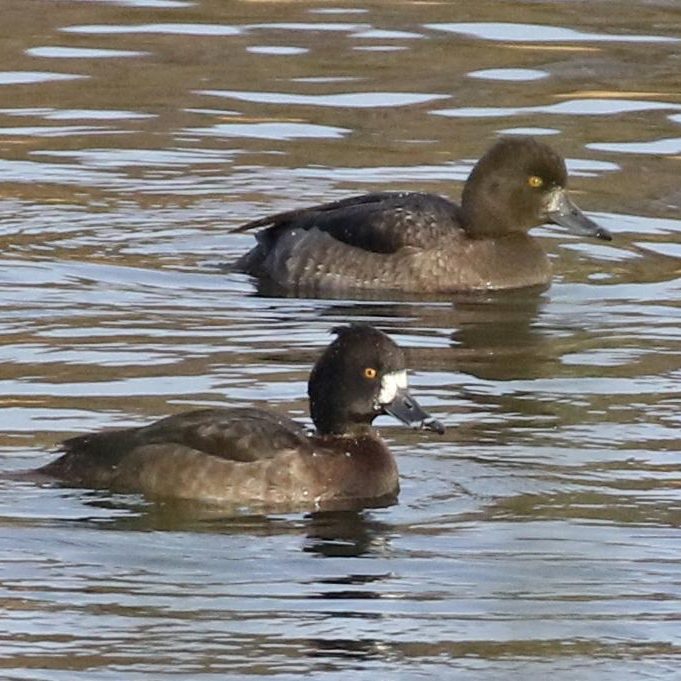
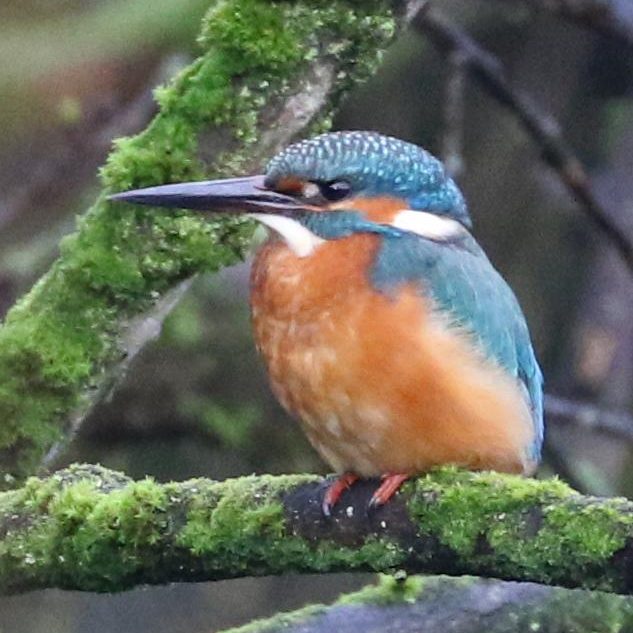
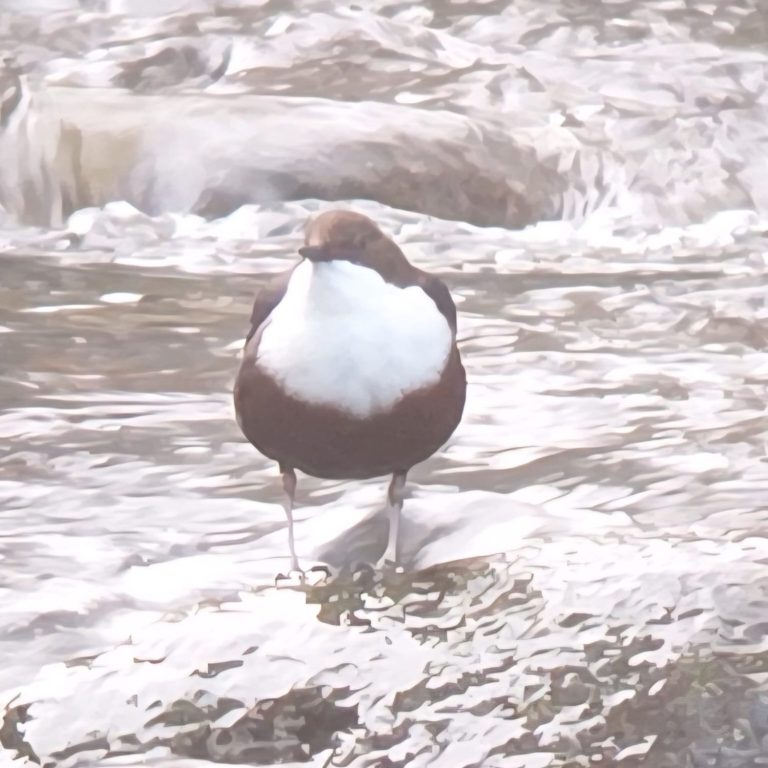
On Sunday 18th January, 8 members attended the first outing of 2026 to North Wales meeting as usual at Llanfairfechan promenade where there was hardly any wind, the sea was calm and the tide was well in. It was a little overcast, and the light was a little strange making viewing a bit difficult. We moved under the shelter and soon picked up Red Throated Diver, Common Scoter, Goosander and Eider. We had a quick look at the river but no joy, so we drove up into the village to view from a different location. We were soon rewarded with Grey Wagtail, Goldcrest and best of all stunning views of two Dipper.
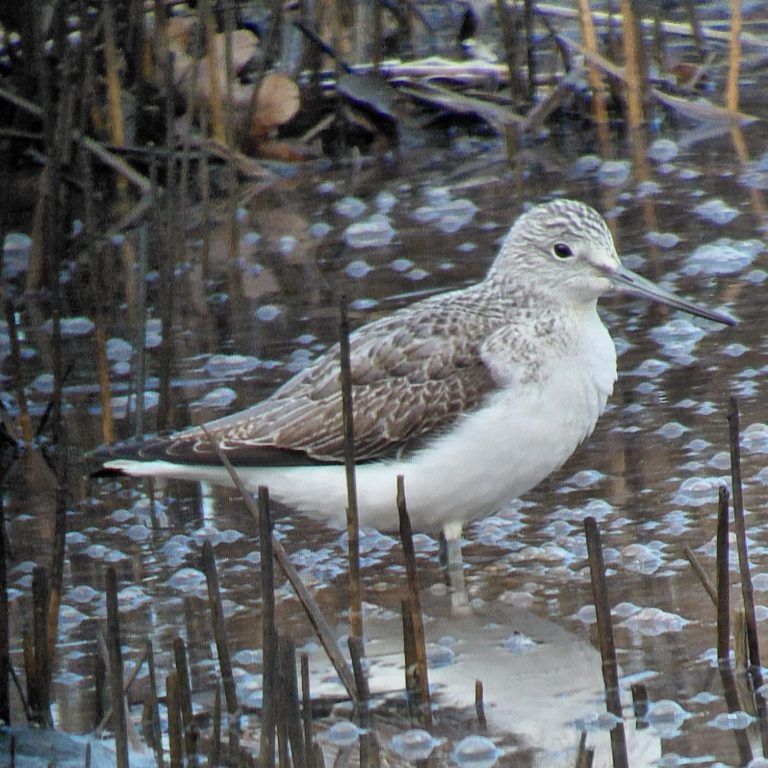
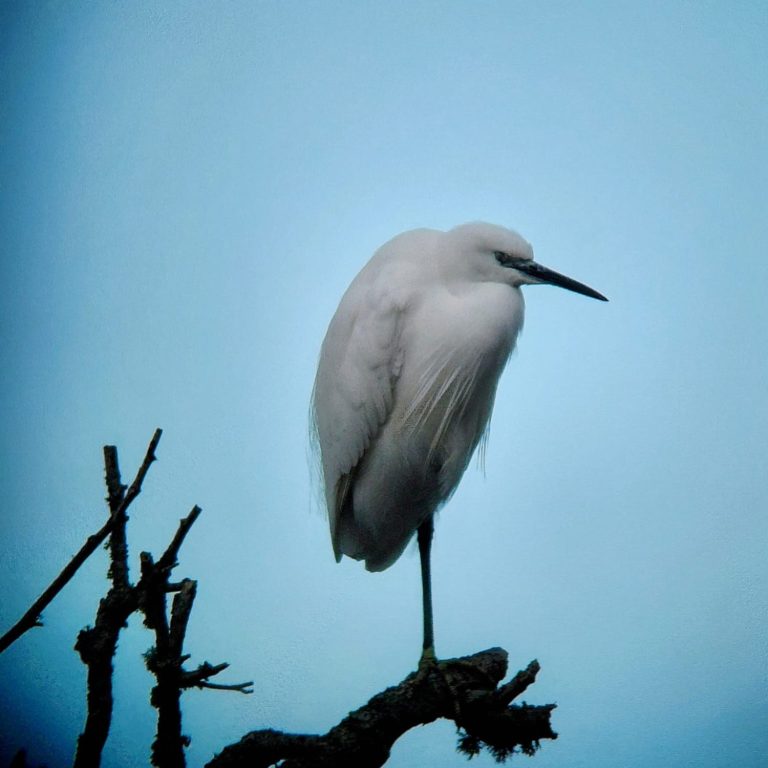
After about a couple of hours we drove west along the coast the Spinnies Nature Reserve at Aberogwen. We parked down at the estuary car park where highlights included Wigeon, Red Breasted Merganser, Goldeneye, Rock Pipit together with flight views of Greenshank. We walked down to the two road hides and were rewarded with some woodland birds at the feeders including Goldfinch, Greenfinch, Bullfinch, Siskin and Coal Tit. At the roadside hide, a Little Egret sat on one leg in a tree and one of the Greenshanks landed on the small pool. Returning to the cars for our lunch, highlights included Redshank, Greenshank, Curlew, Turnstone and a few Pintail.
After lunch we started our journey back home but called first at the Great Orme. There has been a Shorelark present here for a couple of months but after searching for an hour or two, we failed to find it but as a small consolation we saw Stonechat, Meadow Pipit, Common Buzzard, Raven and Chough.
We moved along the coast to the east end of Colwyn Bay promenade where in amongst the thousands of Common Scoter, Paul B managed to find one of the overwintering drake Surf Scoters. A few in the group managed to find it but sadly I must report the leader didn’t. Other highlights included Great Crested Grebe and Razorbill.
Our final port of call was meant to be Horton’s Nose in Rhyl to look for the overwintering Black Redstart but sadly by the time we left Colwyn Bay the light had gone, and we had to call it a day.
The weather stayed fine all day without any rain and even sunshine while we were on the Great Orme unlike the weather back home in Cheshire where it rained all day. We all had an enjoyable day and managed a respectable 56 species.
Thanks to Paul Bebbington for his photoscoped photos
Ray Evans
20th January 2026
RSPB Burton Mere Wetlands
Eleven members made it to Burton Mere for the first Tuesday trip of the year. Weather was overcast but dry with a chilly wind blowing which got stronger as the morning progressed.
Starting at the visitor centre there were good numbers of ducks and waders on the Scrape including Redshank, Black Tailed Godwit, Lapwing, Wigeon and Knot, plus a handful of Ruff and a single Common Gull. Up to 5 Marsh Harriers were seen over the reed beds.
Moving on to the Bunker Hide and bird feeders there was little of note although a Kestrel was spotted sitting on top of a telegraph pole. Moving back through the visitors centre we took the track to the Mere where a flock of around 50 Siskins were feeding. Moving onto the Marsh Covert Hide there was very little to be seen so we headed to the Bridge Screen where several Pintail were identified.
The group now walked onto the Border Hide where a mixed flock of Black Tailed Godwit, Lapwing and Knot also contained two Dunlin. A Great White Egret dropped in close to the hide and was watched for several minutes catching fish in the pool.
By 1pm the weather was growing increasingly chilly so we headed back to the visitor centre, highlight of the return walk was an overflying group of Curlew. Paul and Denise headed off to Denhall Lane but sadly were unable to locate a Short Eared Owl. A Sparrowhawk enlivened the lunch break back at the visitor centre bringing our group species total to 51 for the day - an excellent start to 2026.
Thanks to Paul Bebbington for his excellent photos.
Ged Petch
17th February 2026
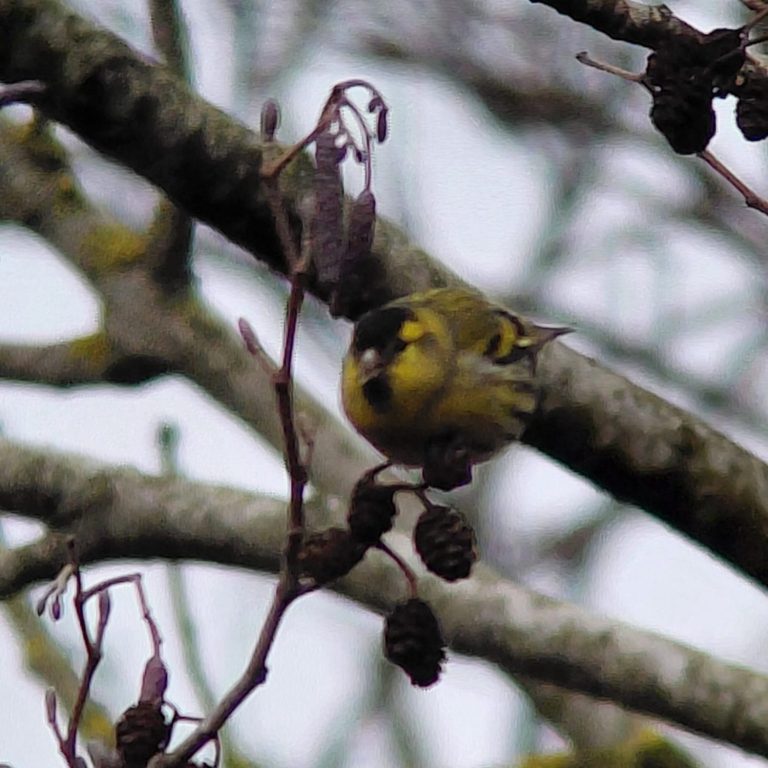
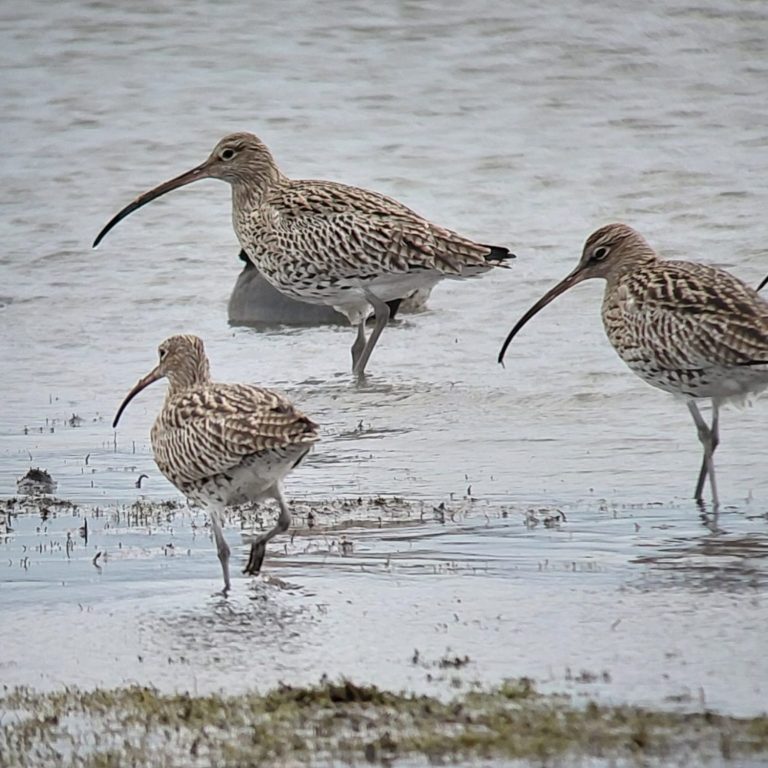
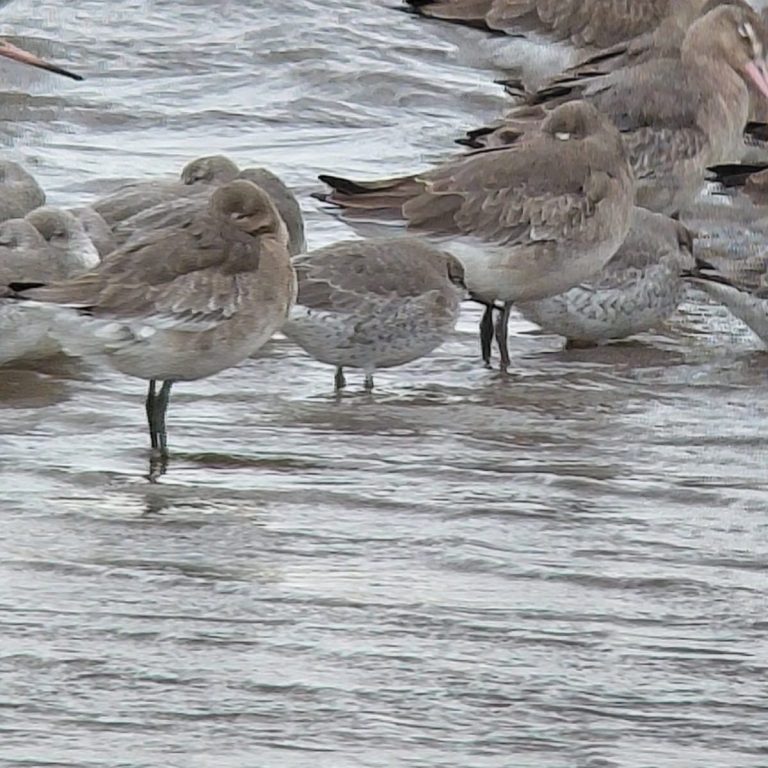
Neumann's Flash and Dairy House Meadows
A good turnout of 11 members took advantage of a rare sunny (but chilly) morning round the Northwich flashes. Meeting at Witton Mill carpark at 10.00am we had problems getting underway initially as the car park quickly filled up with multiple dog walkers and a walking group. Ian and Anne had to find alternative parking but once that was sorted we began by visiting the viewpoint overlooking Ashton’s Flash. Unfortunately this proved to be completely devoid of birds so we headed to the hide beside Neumann’s which was much more productive with large numbers of Wigeon, Shoveler and Tufted Duck, Lesser Black-Backed Gulls and a pair of displaying Great Crested Grebes.
Moving on round the Flash we had a brief view of a Great Spotted Woodpecker and then several Goosander at the far end of the lake. Heading on to Dairy House Meadows we had buzzard and sparrowhawk and then a few members were lucky enough to see a Woodcock fly across the path. Following several false alarms we finally saw a flock of Redwing in trees close to the car park and along the same section saw Grey Wagtail and Teal and heard Cetti’s Warbler and a squealing Water Rail.
With lunch calling we arrived back at the cars at 1pm. No great rarities today but some interesting birds and all agreed an enjoyable and worthwhile trip.
Ged Petch
27th February to 1st March 2026
South-West Scotland
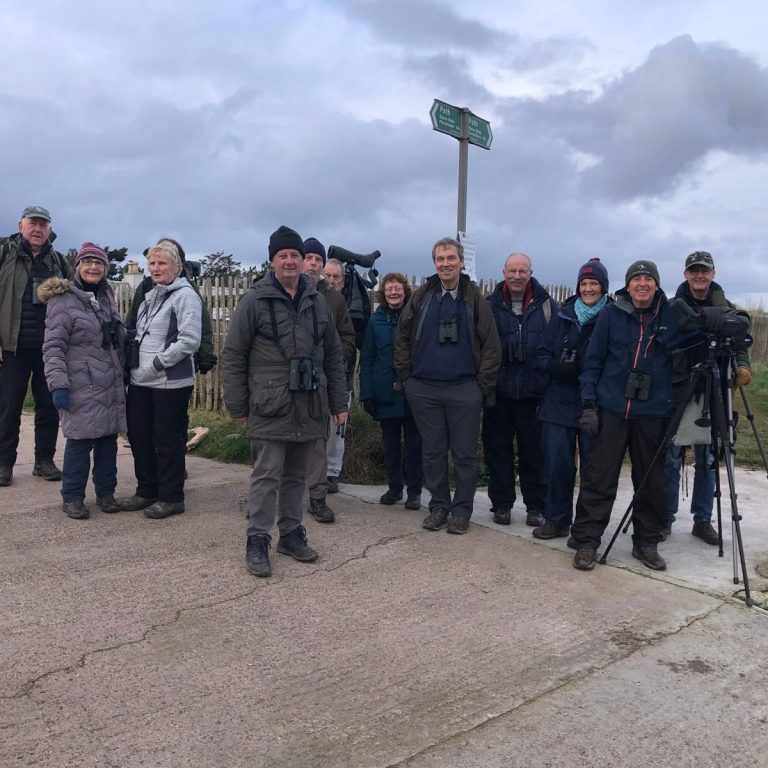
Over the weekend of 27th February – 1st March 15 members enjoyed a weekend’s birding in S.W. Scotland. We stayed at The Crown Hotel in Newton Stewart, a new venue for us where we were very well looked after with excellent breakfasts and evening meals.
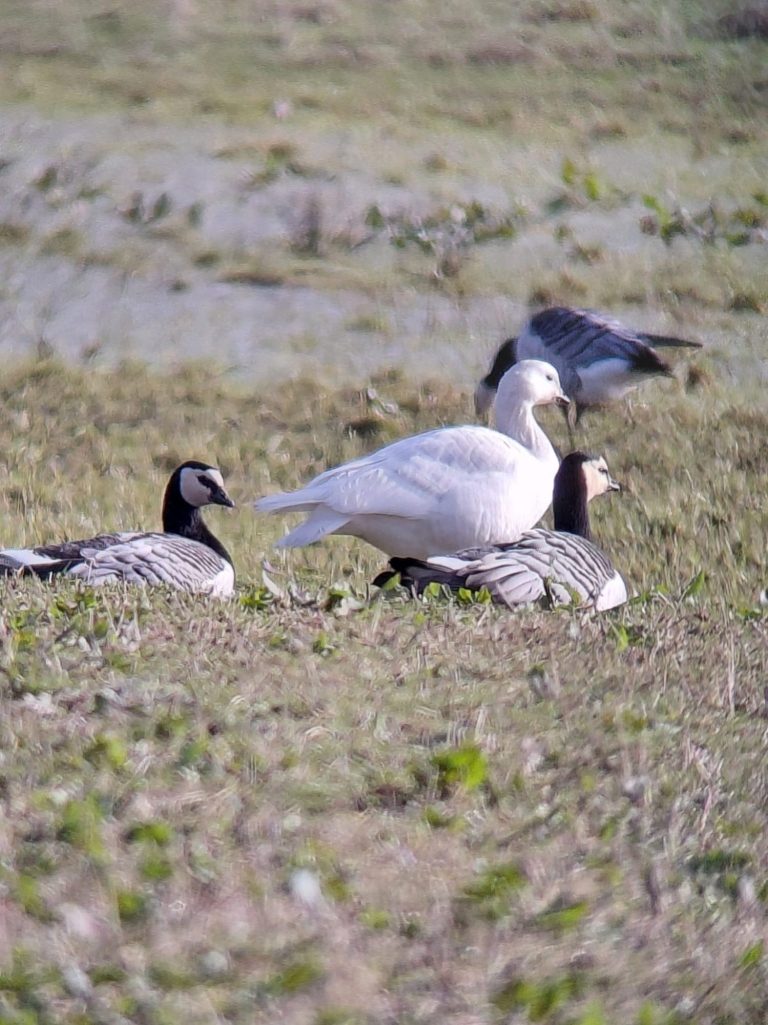
We met late morning on the Friday at RSPB Mersehead on the Solway in quite benign weather with some warm sunshine and highlights here included hundreds of Barnacle Geese (including a leucistic bird), Wigeon, Shoveler, Pintail and a few raptor species including Red Kite, Marsh Harrier and Sparrowhawk. We had our lunch at the visitor centre where the feeders had Tree Sparrow, Yellowhammer and Greenfinch.
We then travelled the short distance back east along the coast to Southerness, again bathed in some sunshine but getting chilly and the tide was a long way out. Highlights included Little Egret, Red Throated Diver and Red-breasted Merganser. Waders included Knot, Dunlin, Turnstone, Redshank, Sanderling and Grey Plover. We left late afternoon for Newton Stewart to check in to our hotel and all
enjoyed an excellent evening meal and a few drinks.
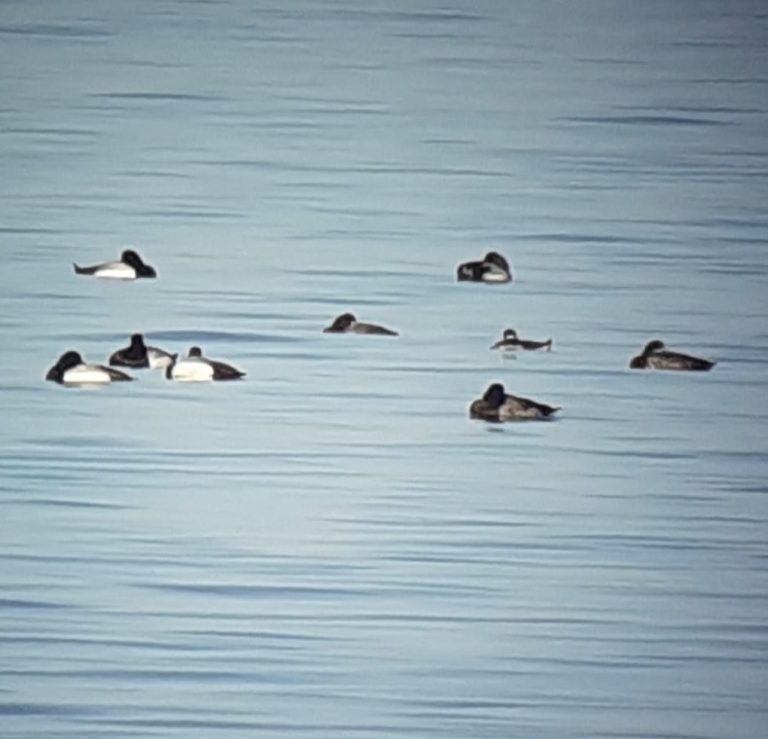
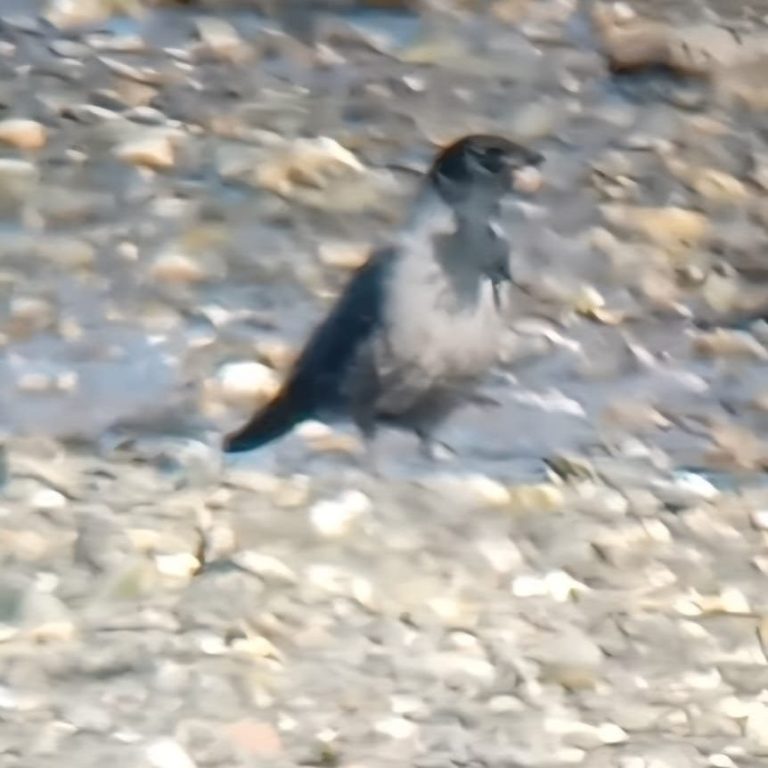
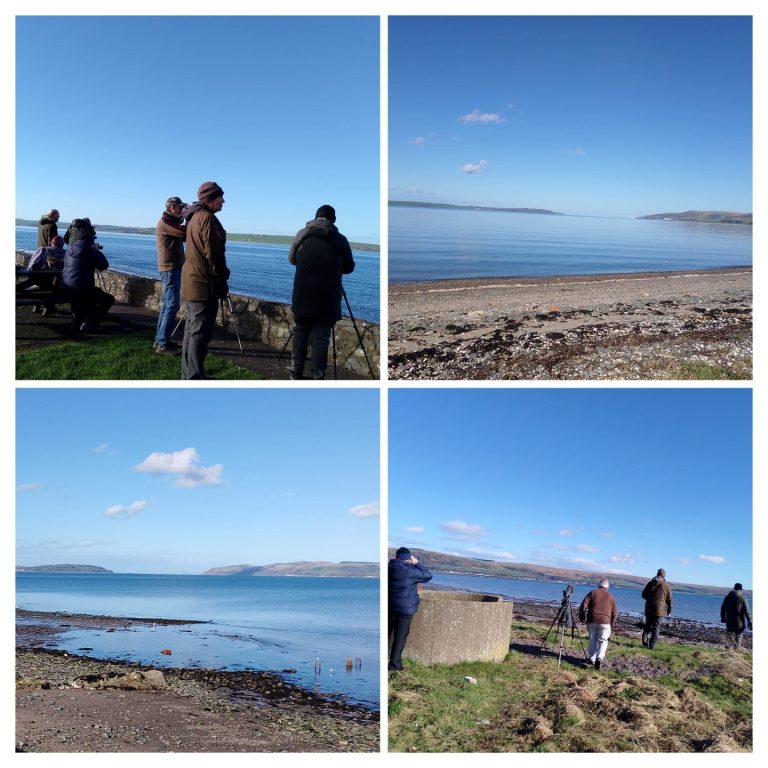
After a great Scottish breakfast (including haggis) on the Saturday we drove west down to Stranraer and Loch Ryan and birdwatched a few points around the loch. We started at Cairnryan, the loch was calm and the sun was out and highlights were Red-Throated Diver, Black Guillemot, Guillemot, Razorbill, Eider, Shag & Grey Wagtail. Moving nearer to Stranraer to the south end of the loch the birding was excellent with beautiful blue sky, good light and the loch like a millpond. We had stunning scope views of Wigeon, Common Scoter, Goldeneye, Scaup, Long-tailed Duck and Slavonian Grebe, an excellent couple of hours. We then moved to a picnic site overlooking the harbour where we had our lunch stop and saw more of the same birds. Our final stop at Loch Ryan was the Wig on the north-west side and with the sun still shining highlights included a small flock of Pale-bellied Brent Geese, Stonechat, Bar-tailed Godwit and Hooded Crow.
We then travelled south of Stranraer to Sandhead and Luce Bay (where you could see the north-eastern end of the Isle of Man) and the best birds were Common Scoter and Red Throated Diver. The final destination for the day was West Freugh where the weather was still sunny, but it had turned chilly towards the end of the day. This is a well-known Hen Harrier roost but sadly we didn’t see any, but we did have Little Egret and Pink-footed Goose. We came across a herd of swans in the area, mostly Mute but with a few Whooper Swans. We made our way back to the hotel and had another excellent meal.
After another filling breakfast and checking out on the Sunday morning, we set off south towards Wigtown Marshes. The weather on the Sunday was as different again with persistent rain. We parked at the Martyr’s Stake carpark and walked a path along the marsh with woodland on the other side. Highlights included Pink-feet and Barnacle Goose on the marsh plus Treecreeper, Bullfinch and Coal Tit in the woodland.
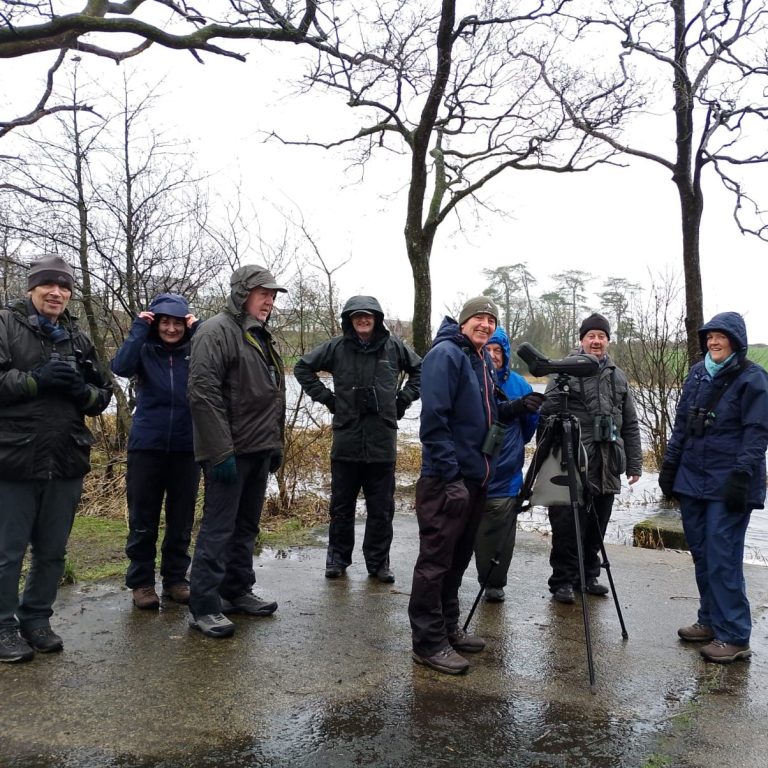
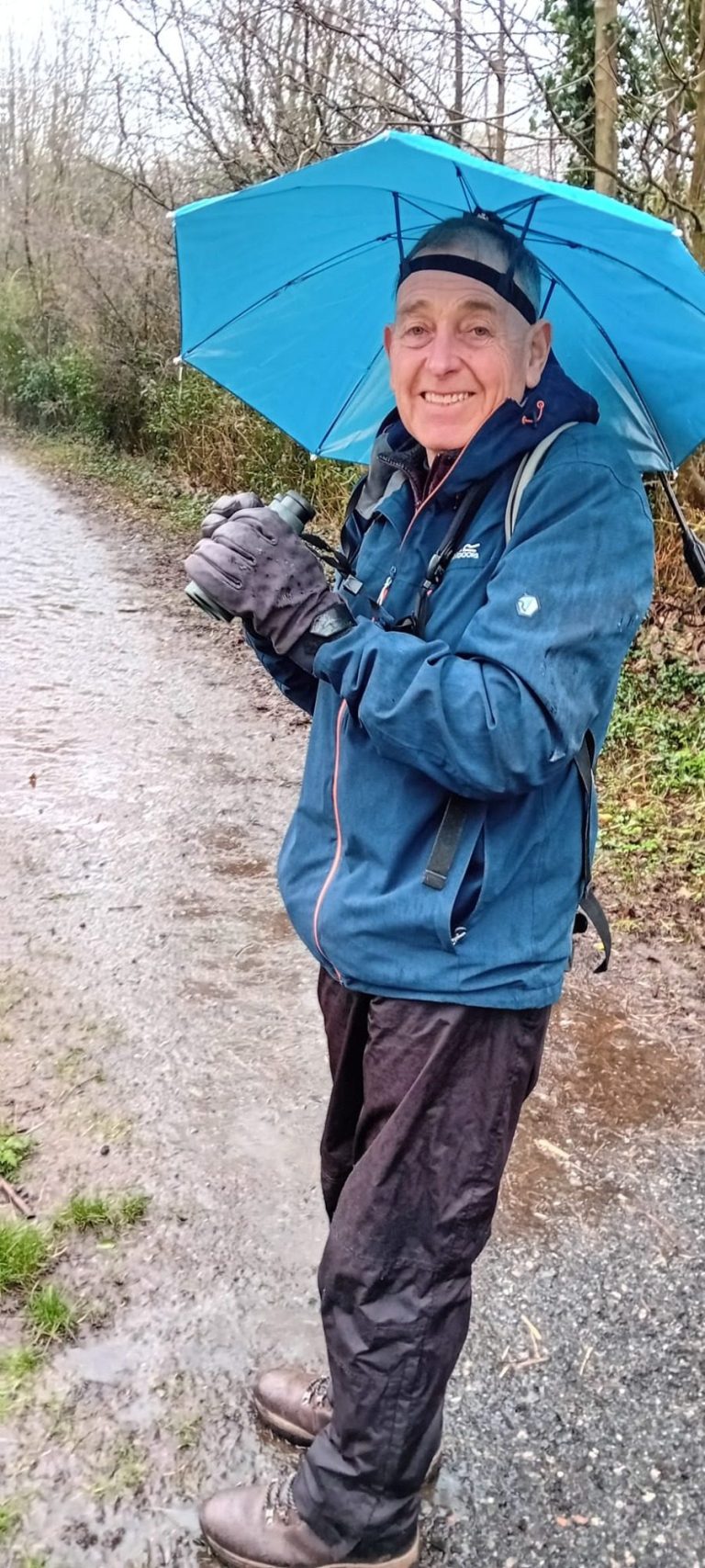
We moved to Carlingwark Loch at Castle Douglas and highlights were Goldeneye, Goosander, Siskin feeding in the vegetation at the side of the plus our only Coot of the trip. By this time the weather was atrocious very wet and windy and after lunch our trip was curtailed. Some hardy souls (Paul & Denise) went on to Caerlaverock NNR. We have Paul below modelling a piece of kit that any discerning birder should have for wet weather conditions (but not windy).
It was unfortunate that the RSPB reserve at Ken - Dee Marshes has closed and the Wildfowl & Wetland Trust decided to close Caerlaverock for the winter – these were two of our prime destinations on previous weekend trips up there. We ended up with a list of 88 species, and everyone enjoyed an excellent weekend with good company, good beer, good food and some good birds.
No one will forget the Saturday afternoon at Loch Ryan in perfect sea-watching conditions and my highlight was the 5/6 Long Tailed Duck at the south end including some resplendent drakes.
Ray Evans (March 2026)
(Photos courtesy of Paul & Denise Bebbington, Anthea Gater, Richard Sturman and Judith Petch)
Tuesday 17th March 2026
RSPB Marshside
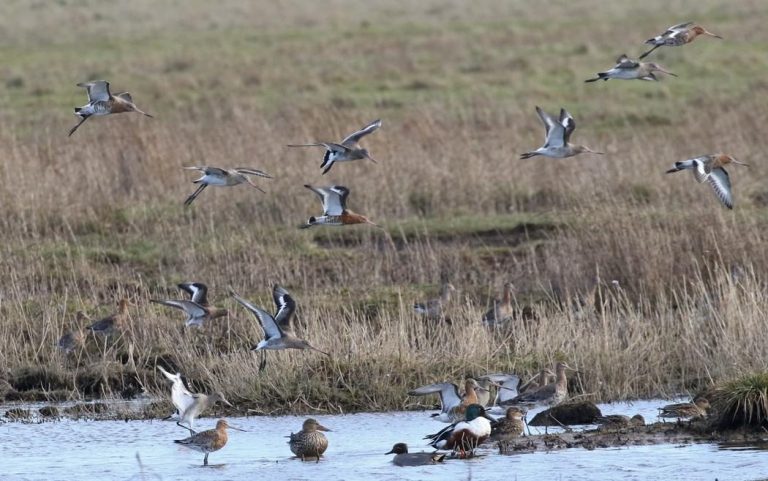
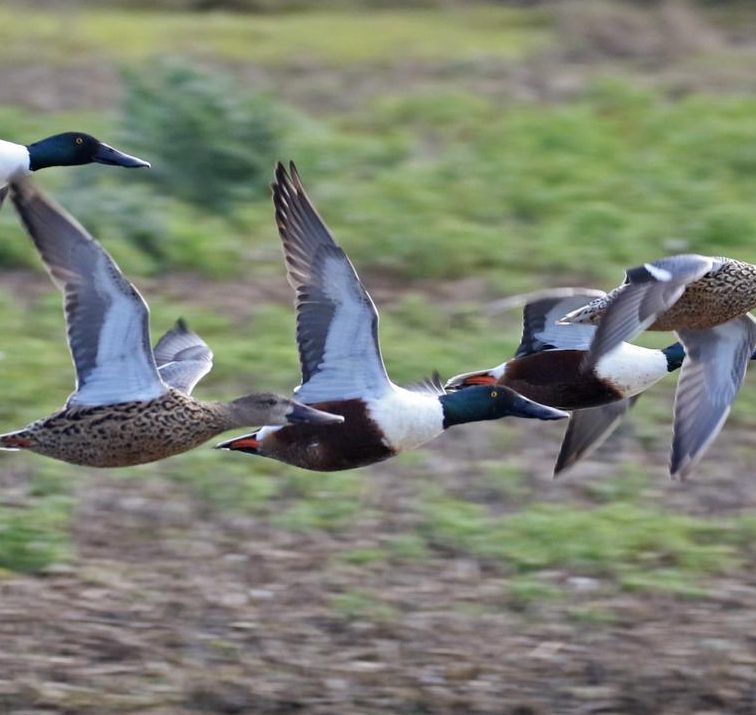
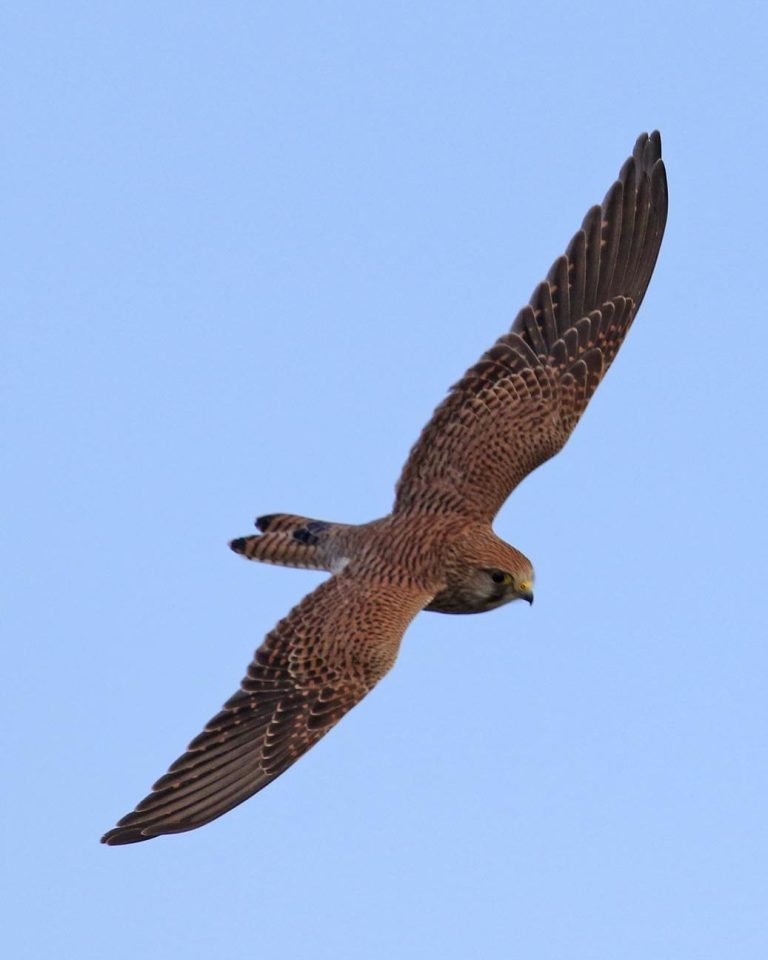
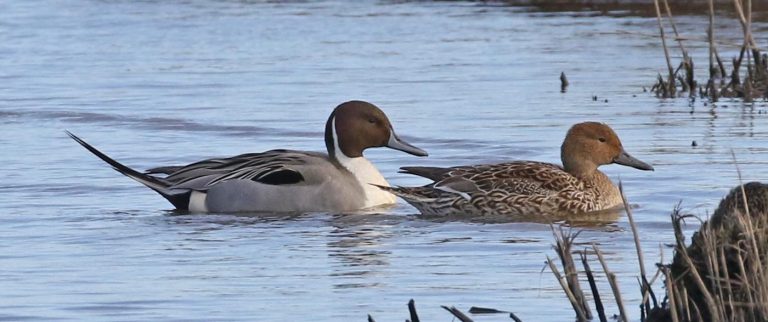
Twelve hardy birding potterers met at the RSPB Marshside/Sand Quarry carpark around 10:15. It was to be 10:00am, but Paul Bebbington sent a note saying there were 2 Little Owls perching on a barn roof nearby. Several went to investigate (no luck), and a few others went after our time at Marshside, again no luck! The weather was fabulous given the winter we’ve had, with glorious sunshine, temperature around 17C, but a bit of a cold wind when out in the open. Nevertheless, we had the Marshside hide to ourselves and were able to see hundreds, if not thousands, of birds. Immediately outside the hide were the usual Black-headed Gulls, Tufted Ducks, Black-tailed Godwits, Coot, Mallard, Wigeon and a hovering Kestrel.
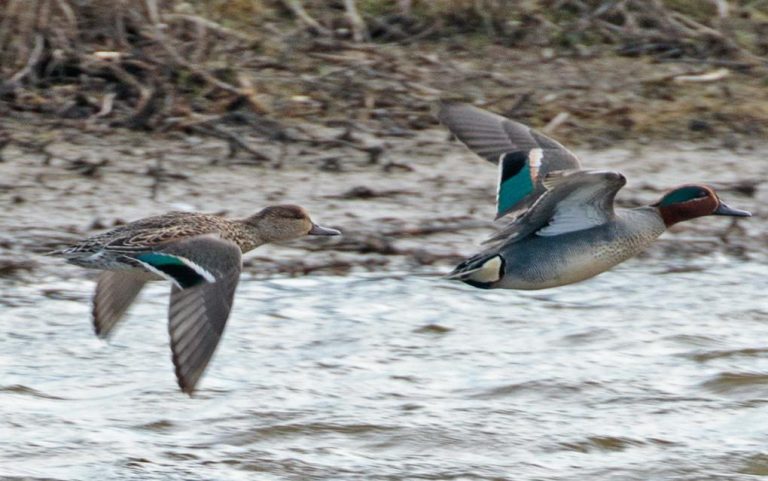
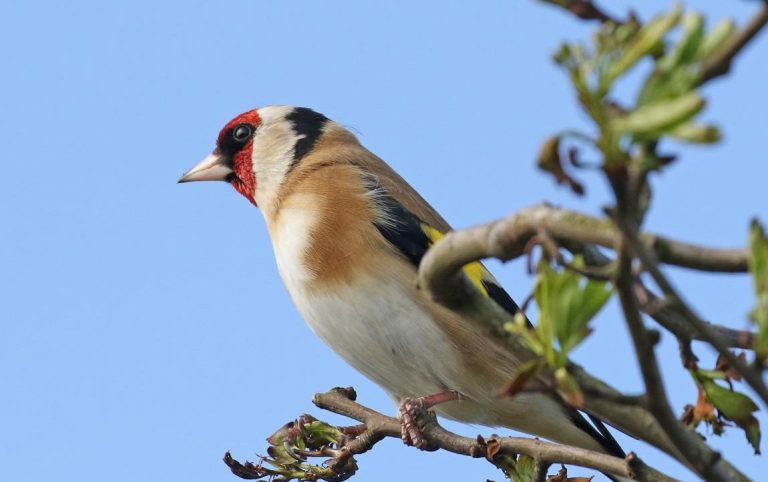
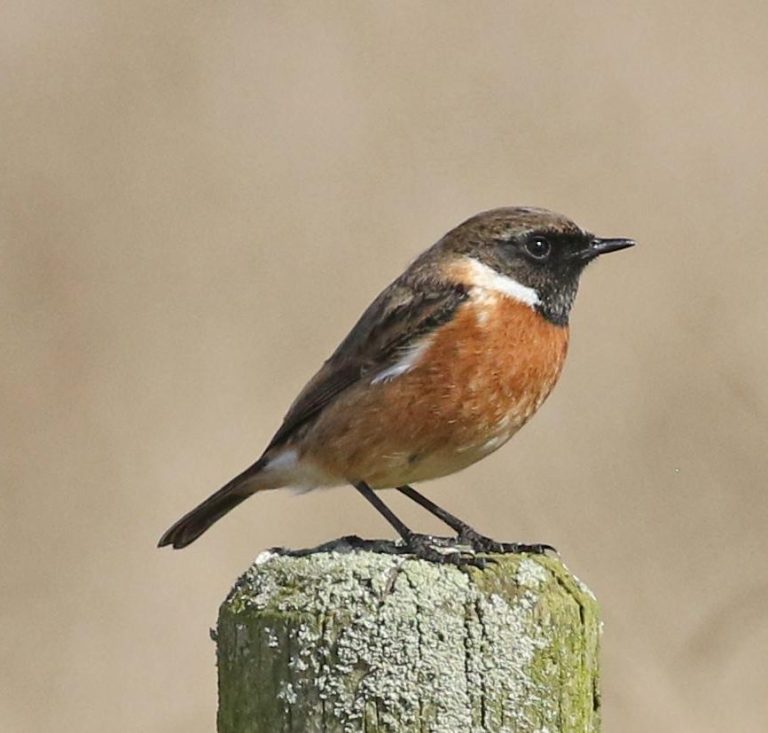
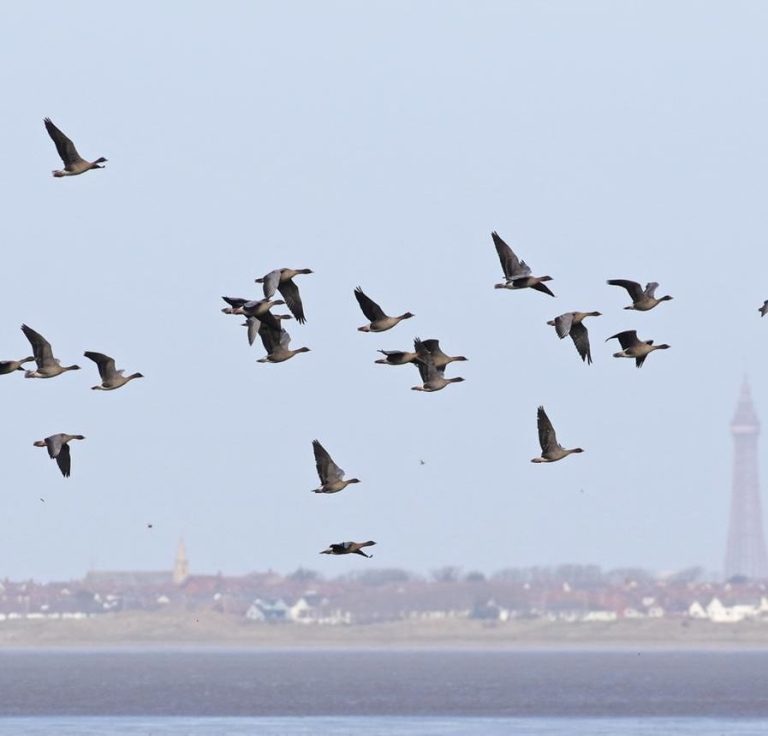
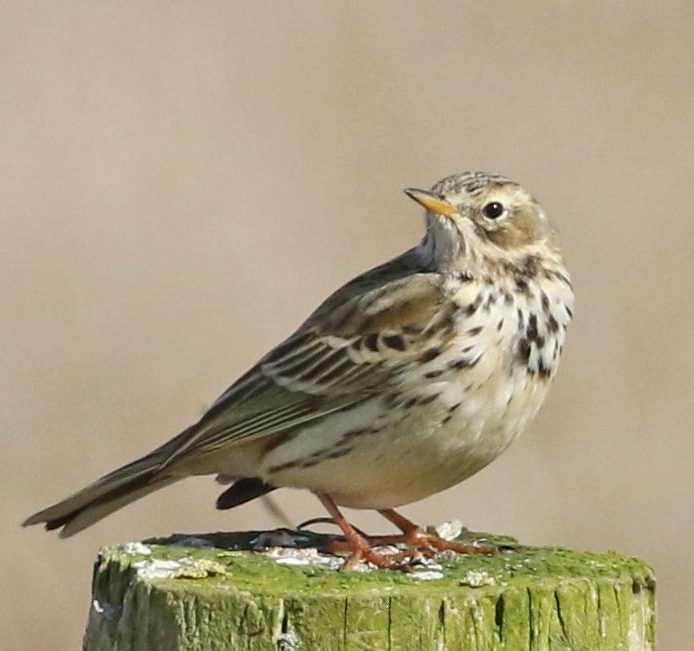
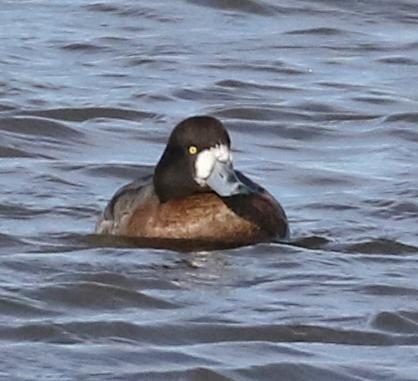
In the distance were huge flocks of Golden Plover, Avocets, Black-tailed Godwit and Starlings and nearby there were also a few Pintail, Redshank, Oystercatcher, Teal, Shoveler, Shelduck & Lapwing. Ian B spotted very lonely Little Ringed Plover which almost looked out of place amongst all the large waders, ducks & gulls! After a while we then wandered off to the other side of the road to spot stuff over the surf-side marsh. We had fabulous views of a Stonechat, Meadow Pipit, Skylark as well as Little Egrets, Grey Heron, Pink-footed, Canada & Brent Geese, and the following hovering Kestrel. Also seen in the nearby bushes were Goldfinch, Greenfinch & Chaffinch. As it was now lunchtime the group started to thin out, but some went to a new observation area on Hesketh Lane. Again, lots of Tufted Ducks, Coot and Mallard, but in amongst them all a (Greater) Scaup, a big tick for the day. Several others went back to look for the Little Owls, again to no avail, but they did see a lovely Marsh Harrier on the way out.
So, all in all a lovely day with glorious sunshine for a change. Many thanks to everyone for ensuring that everyone saw lots of great birds & had an enjoyable day birding.
Andrew Aldridge
Photos by Simon – many thanks.
Bird List (seen by most but not all!)
Brent Goose Canada Goose Greylag Goose Pink-footed Goose
Gadwall Mallard Mute Swan Pintail
Scaup Shelduck Shoveler Teal
Tufted Duck Wigeon Redshank Black-tailed Godwit
Reed Bunting Blue Tit Carrion Crow Magpie
Chaffinch Goldfinch Greenfinch Starling
Avocet Blackbird Meadow Pipit Skylark
Pied Wagtail Kestrel Little Grebe Little Egret
Grey Heron Black-headed Gull Herring Gull Stonechat
Oystercatcher Woodpigeon Golden Plover Lapwing
Little Ringed Plover Blackcap Coot Moorhen
Marsh Harrier
Sunday 22nd March 2026
World's End
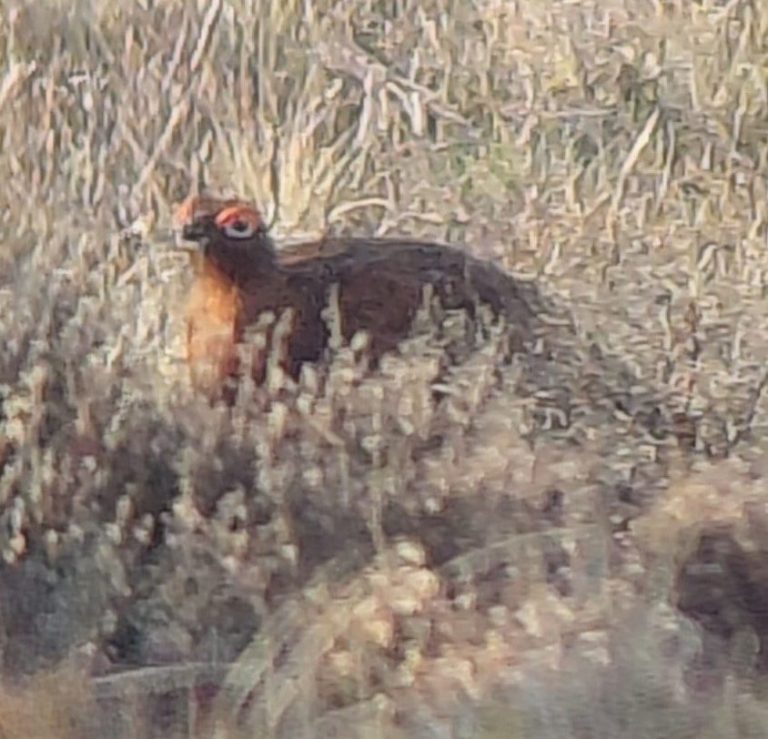
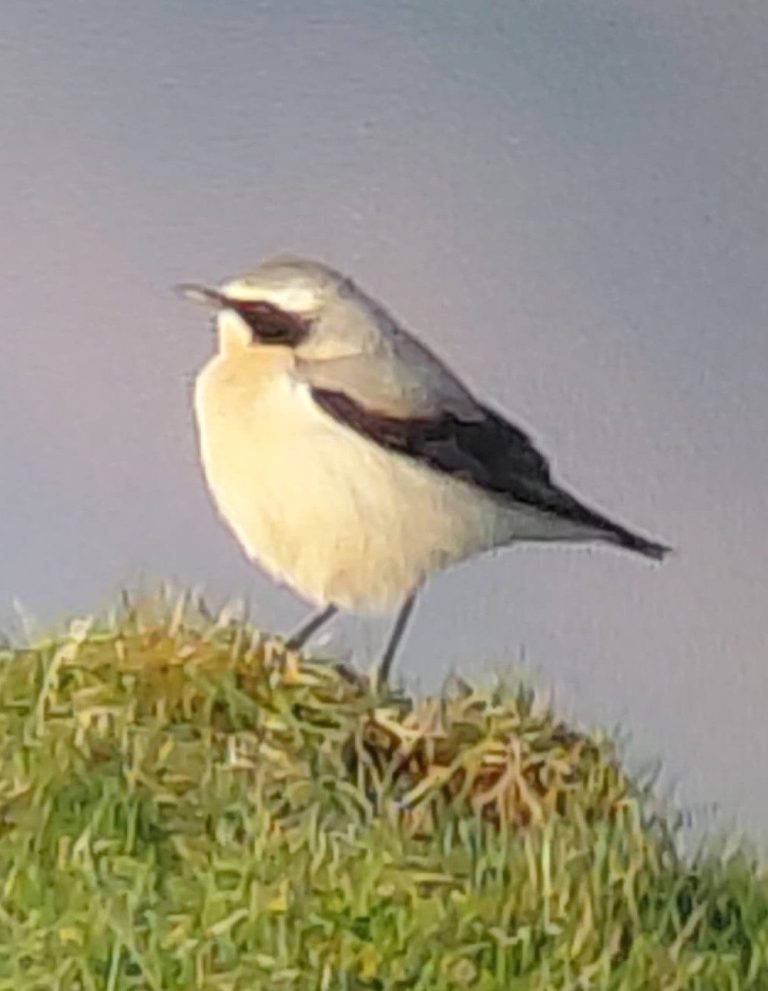
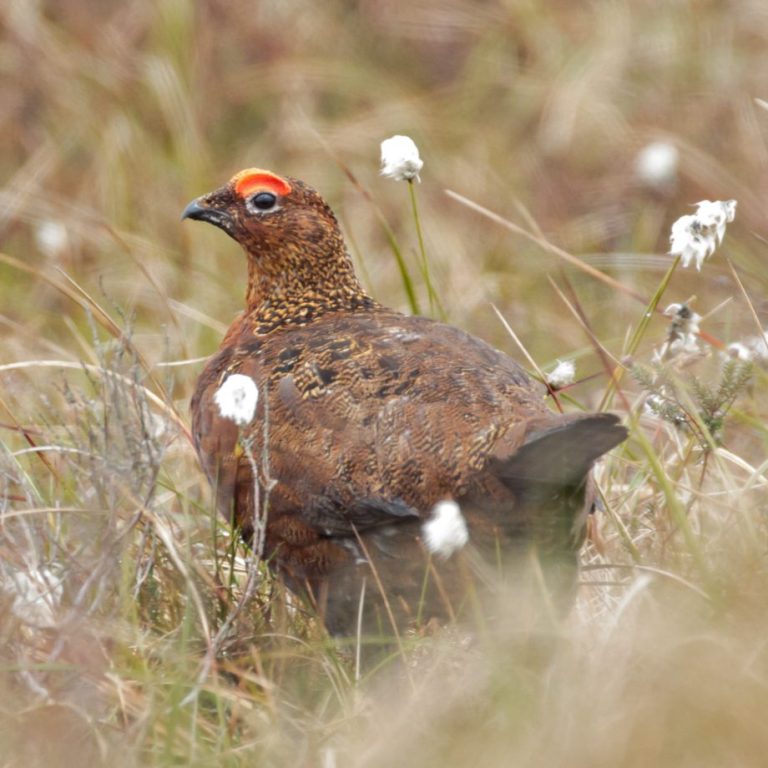
Eight MCOS members met for an early start at Worlds End. On arrival Black Grouse could be seen and heard at their lek. Maximum number seen at one time was thirteen. Whilst at the watchpoint individual Red Grouse were seen on the moor. In addition a pair of newly arrived migrant Wheatears were seen at distance.
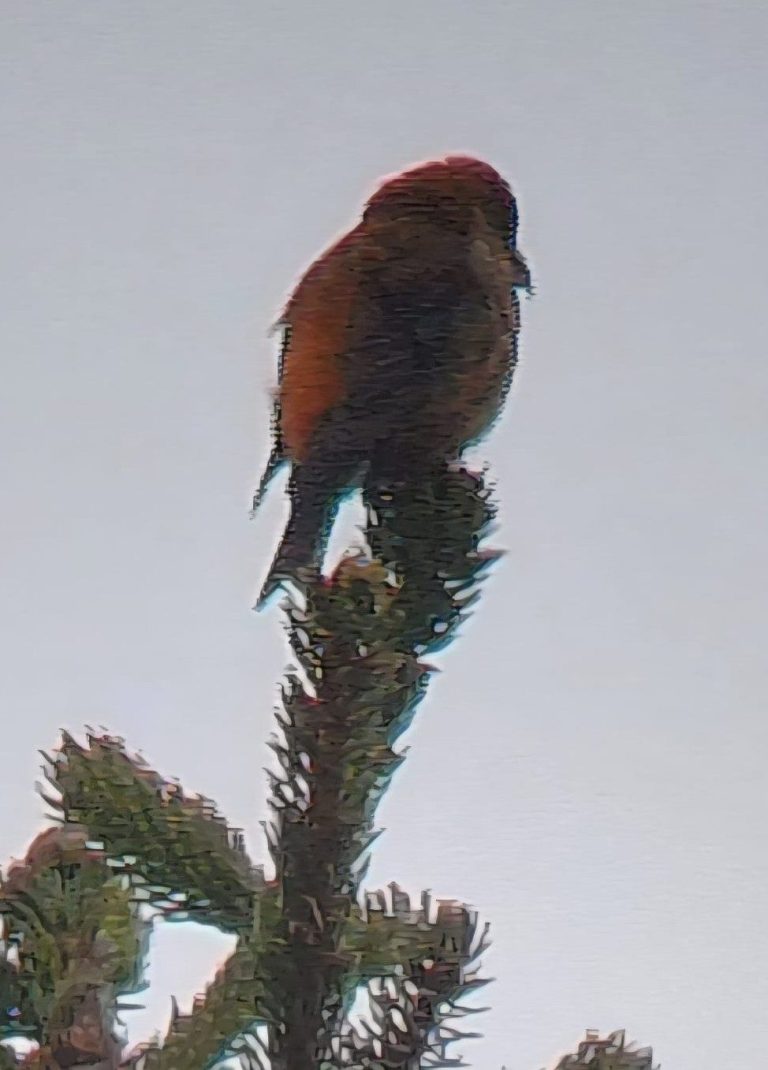
Moving on across the moor, Raven, Stonechat, Skylark and numerous Meadow Pipits were seen. Next stop was Clocaenog Forest picnic area. On arrival a Goshawk was seen very briefly by some of the group. Moving off from the car park a small group of Crossbills were spotted feeding in the pines, although quite mobile good views were possible with the male birds in fine colour. Goldcrest, Chiffchaff and Nuthatch were also seen.
The group then moved on to the popular Goshawk view point at Bron Bannog. Shortly after arrival two birds were seen at distance which were quickly identified as a pair of Goshawk. One of the birds slowly but surely flew towards the group eventually giving excellent views.
Brenig Reservoir was the next port of call. At the feeding station Willow Tit, Blue Tit, Great Tit and Chaffinch were regular visitors.
The final stop was Flint Castle. This is a good site for wintering Twite but none were seen. However, on the shoreline waders including Grey Plover, Black Tailed Godwits, Redshank, Oystercatcher and Turnstone were present. Ducks included, Shelduck, Pintail, Wigeon and Teal. Greater Black Backed Gull, Common Gull and Little Egret were also present.
This concluded a very enjoyable days birding with 63 species seen on the day.
Graham Haspey.
Photos courtesy of Paul Bebbington
Sunday 26th April 2026
Conwy Valley
Only 6 members attended our Sunday 26th April trip to the Conwy Valley in North Wales led by Ray, to hunt for summer migrants. We met at Conwy RSPB at 9.00am where the weather was warm and calm. The reserve wasn’t open, but we entered through the side gate and walked down to Tal-y-Fan hide and eventually on to Carneddau Hide. Migrant highlights included Reed & Sedge Warbler, Blackcap, Chiffchaff, Whitethroat, Wheatear, Swallow and House Martin. Other highlights were Great Crested Grebe, Little Egret and Cetti’s Warbler.
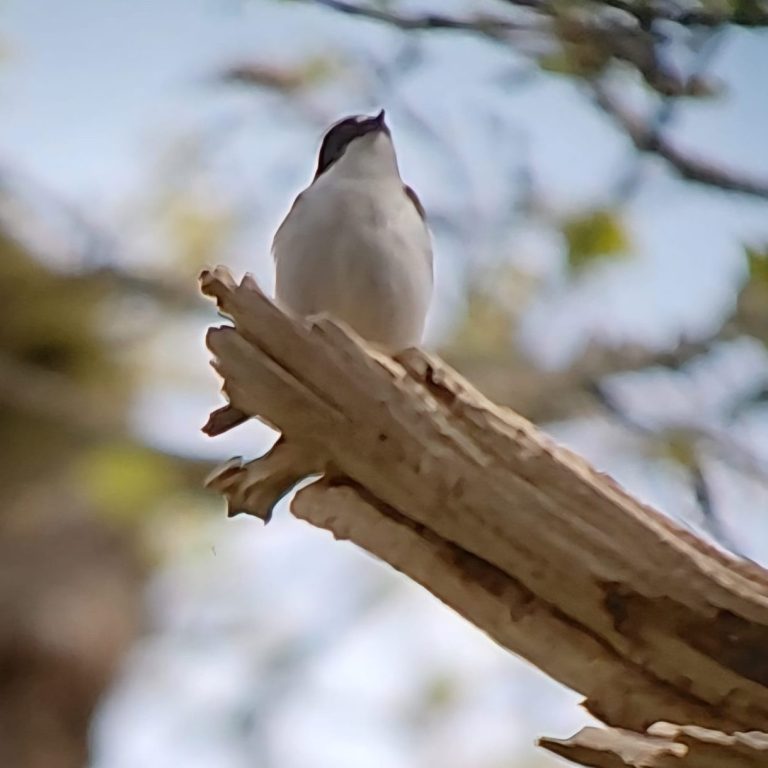
We then travelled down the valley to Hafod Wood, just south-east of Llanrwst. We walked up into the woods and saw some woodland birds including Song & Mistle Thrush, Treecreeper, Great Spotted Woodpecker and had excellent views of both Pied Flycatcher and Redstart.
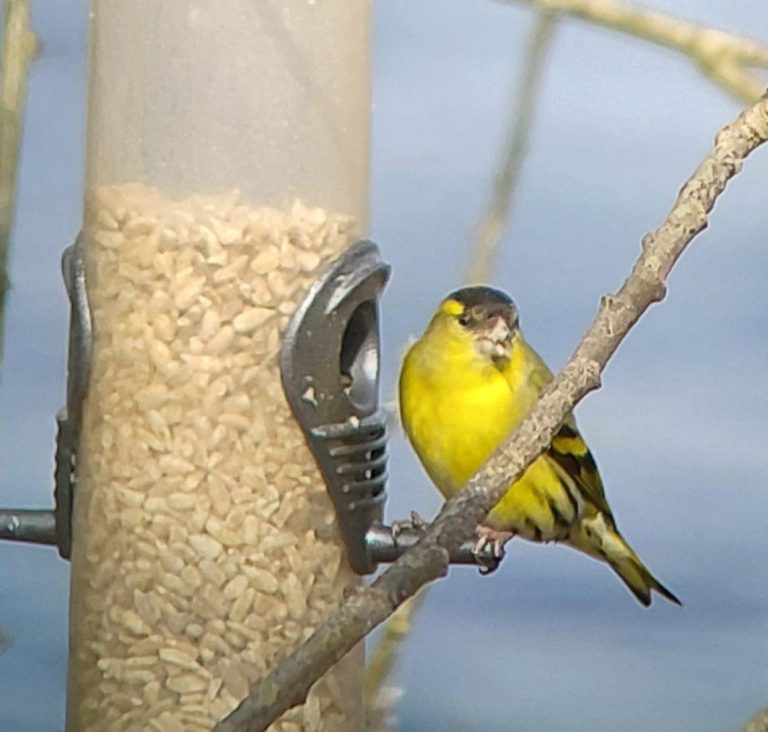
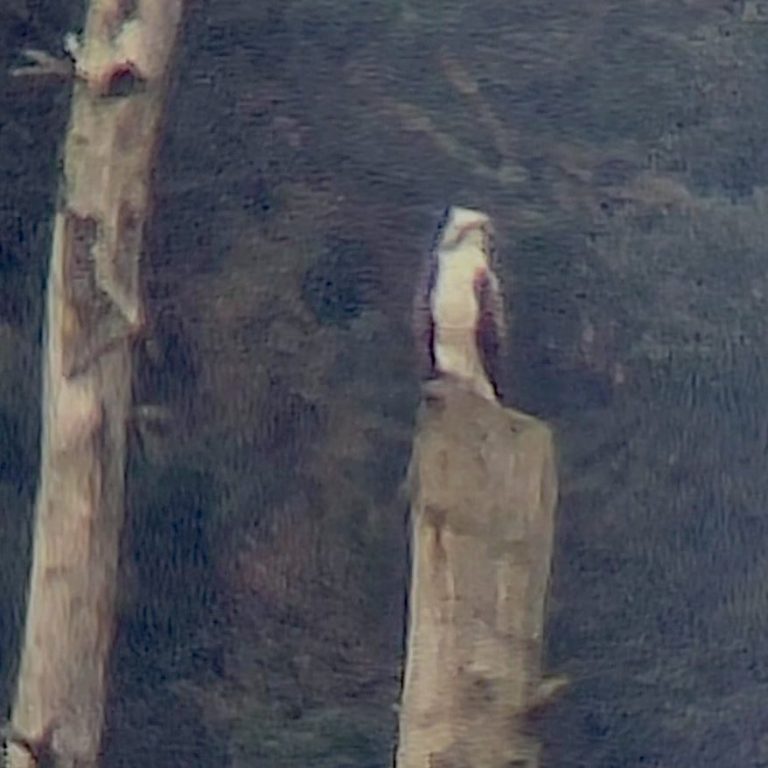
After lunch we moved on to Denbigh Moors and at a few roadside stops, we found further migrants in Willow Warbler and a Cuckoo in flight together with Common Buzzard, Kestrel, Stonechat and a single Redpoll. We travelled down the road to Llyn Brenig where at the feeders we added further Redpoll, Siskin and Willow Tit and Paul found a migrant Common Sandpiper on the edge of the reservoir. At the Osprey lookout we undoubtedly saw our best migrant of the day with the female sat on the nest at the platform and the male on sentry duty on a tree stump some thirty metres away. Further highlights here included another Willow Tit and a Garden Warbler.
Our final stop was at Bod Petryal, the picnic site in Clocaenog Forest where the only highlight was a single Goldcrest. It was disappointing again not to find any Wood Warblers anywhere despite calling at known sites.
It was a beautiful sunny day with light winds, and we managed a very respectable 63 species and the highlights for me were the stunning views of both Pied Flycatcher and Redstart in Hafod Wood.
(Photographs courtesy of Paul Bebbington)
Ray Evans
Tuesday 14th April 2026
Mere Sands NR and Martin Mere WWT
Five members met at Mere Sands NR at 10am on a dry overcast day. We did the circular walk around the lakes anti-clockwise and soon got our first spring migrants. A Blackcap was showing nicely and singing its head off! A Reed Warbler was heard in the reeds by the lake but not seen. We clocked the usual water birds on the lakes and were treated to close views of a Great White Egret. We also saw our first House Martins of the year swooping over the lake.
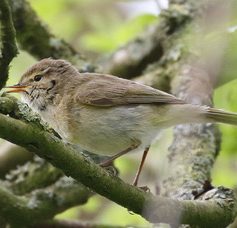
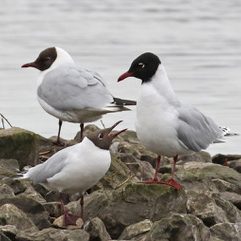
At the end of the walk it started to drizzle and we set off for Martin Mere and had our lunch in the excellent cafe. Here we saw Marsh Harrier, Swallow and Avocet. Most geese had goneapart from Greylag. The lakes were teeming with Black Headed Gulls who were very noisy. A volunteer helped us to identify a lone Mediterranean Gull who had teamed up with a Black headed Gull, not sure how this ended up!
We totalled 47 species for the day.
Stephen Williams
Photos courtesy of Simon Smith
Tuesday 7th May 2026
Goyt Valley
Seven members took part in the final mid-week trip of the MCOS season. The weather forecast wasn’t promising and the roads into the Goyt Valley are basic and, on this occasion, subject to randomly signed closures for repairs. Coincidentally, a larger group from SECOS were doing the same walk but, after a brief chat with their leader, we decided to proceed separately.
Early arrivers at the meeting point, the Errwood Hall carpark, were greeted by Common Sandpiper, Goldfinch, Mistle & Song Thrush and the omnipresent Willow Warblers. We started out up the field towards the ruins of Errwood Hall, then turned left onto a track at the edge of the woods. Soon a fine, persistent rain started that dampened us and bird activity, so we missed out on the Goldcrest & Siskin that often frequent the pines either side of the track, but enjoyed the usual, hardier passerines. Further along the track, we had a a few glimpses of a male Redstart and heard a distant Cuckoo calling. Blackcaps were seen & heard, though Tree Pipits were missing from the open area on the right.
Crossing the road onto the wooded stream-side path, we admired the majestic Beech trees and noted the gaps where storm damage and felling of Larch trees for disease control had occurred. A Grey Heron was seen prowling along the stream margins and a Grey Wagtail shot through. There was no sign of the Dipper.
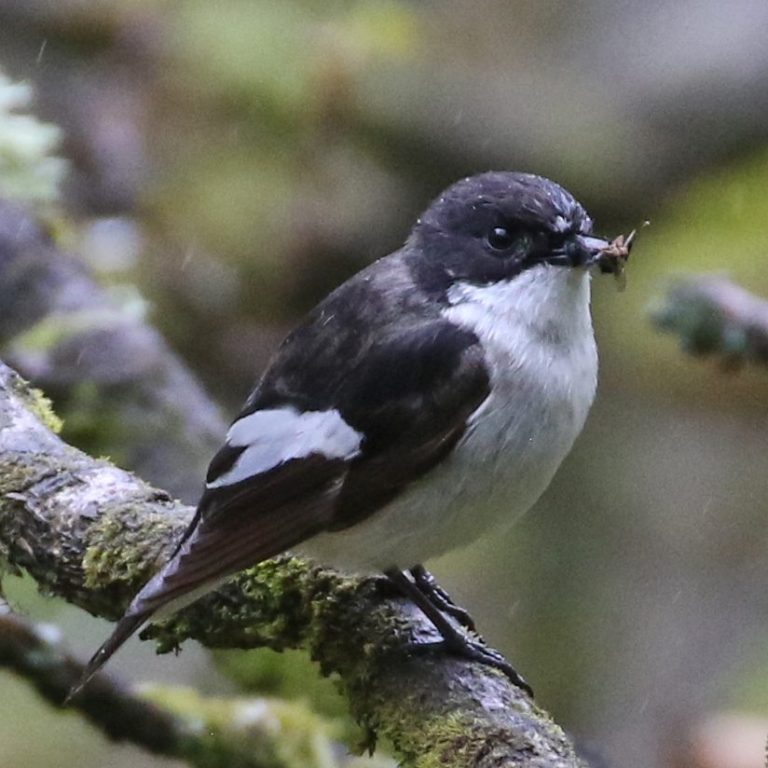
We decided not to ascend the steep steps up to the quarry and instead backtracked to the road. There we had the highlight of the walk with all of us having good views of a male Pied Flycatcher delivering food to a road-side nesting box. As we returned along the road to the carpark, we were hit by a squall of rain that sent us scurrying for the cars.
The return journey involved driving up the Goyt Valley to Derbyshire Bridge, where I had to stop while a Red Grouse crossed the road. In all, about 25 birds were seen or heard.
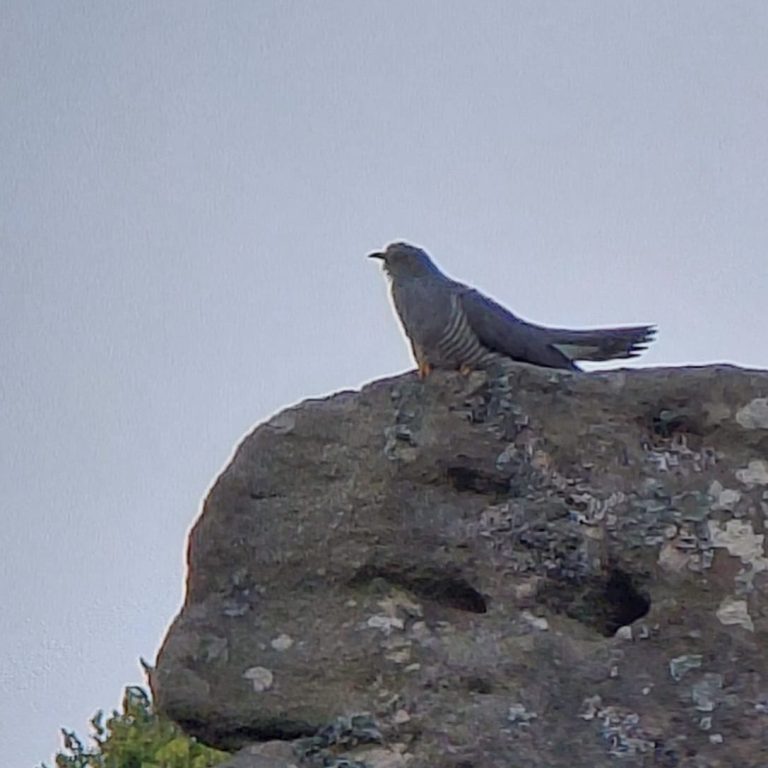
Undeterred by the soaking and armed with an improving forecast, Paul & Denise continued birding the Goyt Valley & further afield. Before leaving the car park they found a Common Ringed Plover on the shore of the reservoir. At Goytsclough Quarry they had Bullfinches, a female Pied Flycatcher, Mistle Thrush & Grey Wagtail. At Derbyshire Bridge they saw a displaying Short-eared Owl, Stonechat, Reed Bunting & Lapwing. While at Three Shires Head they saw Cuckoos being mobbed by Meadow Pipits, Curlew, Kestrel, Swallow & a distant Redstart, finishing with 31 species for the day.
Simon Smith
Photos courtesy of Simon Smith and Paul Bebbington
Thursday 21st to Sunday 24th May 2026
Dorset
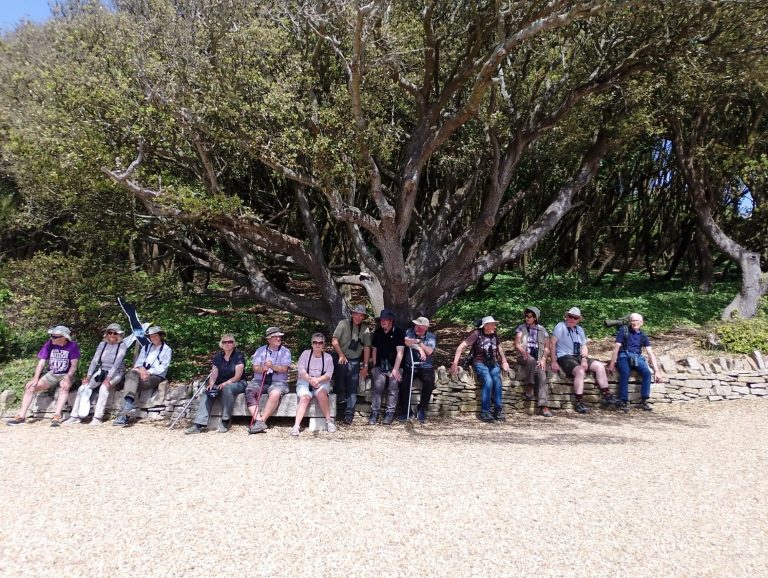
Over the weekend of the 21st-24th May, 14 members enjoyed a weekend’s birding in Dorset. We stayed at the same hotel again, the Castleton in Swanage, and we were well looked after by Kate and her staff.
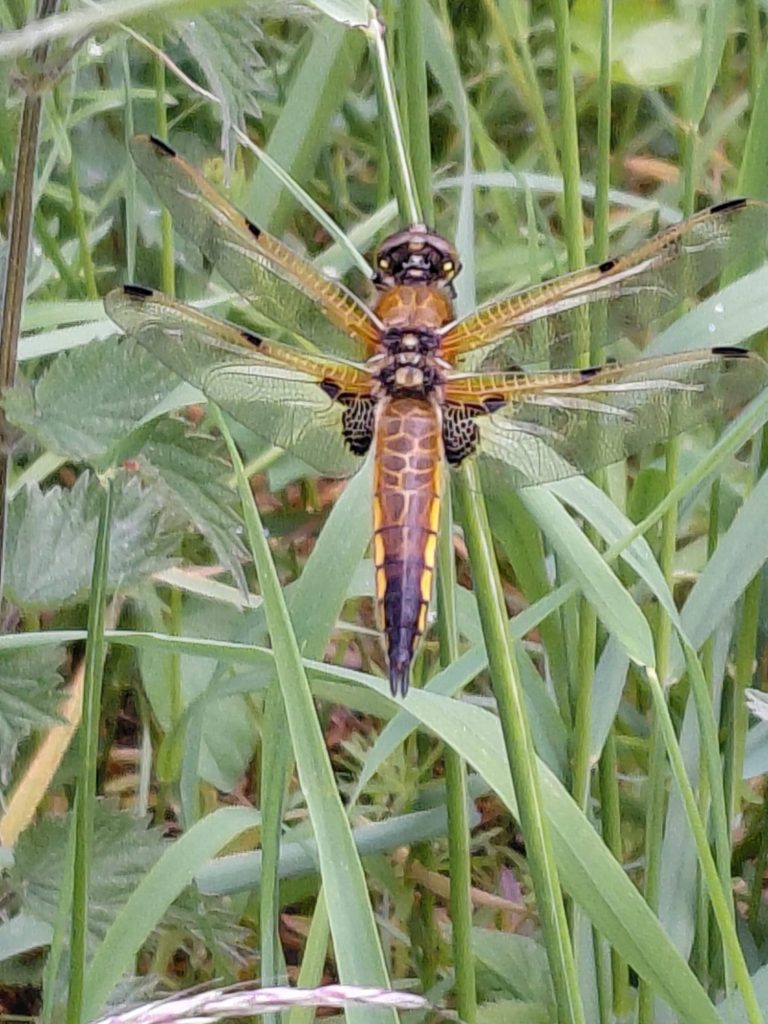
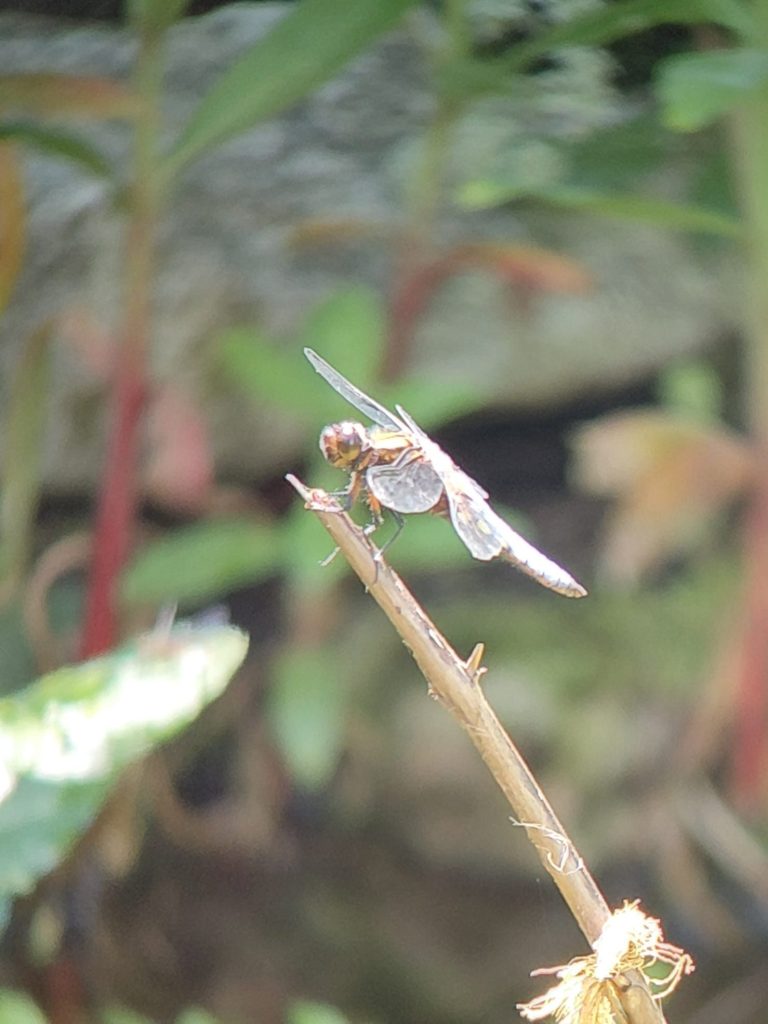
Most of us met late morning on the Thursday, at Ham Wall RSPB reserve on the Somerset Levels and highlights here included Bittern booming but no sightings, numerous Great White Egret, Marsh Harrier, Hobby, Black tailed Godwit, Blackcap, Garden & Cetti’s Warbler. Some saw a Grass Snake basking in the sunshine under the old railway bridge. After having our lunch, we had a brief walk over the road to Shapwick Heath. We didn’t see any different birds, but the insect life included Hairy Dragonfly, Azure & Small Red Eyed Damselfly and Four Spotted & Broad Bodied Chaser. Mid-afternoon we continued our journey to Swanage, checked in at the hotel, and convened at the Greyhound Inn at Corfe Castle for our evening meal. After eating we drove to Studland where we heard and saw a Nightjar plus Stonechat, Tree Pipit and a few Roe Deer and Brown Hare.
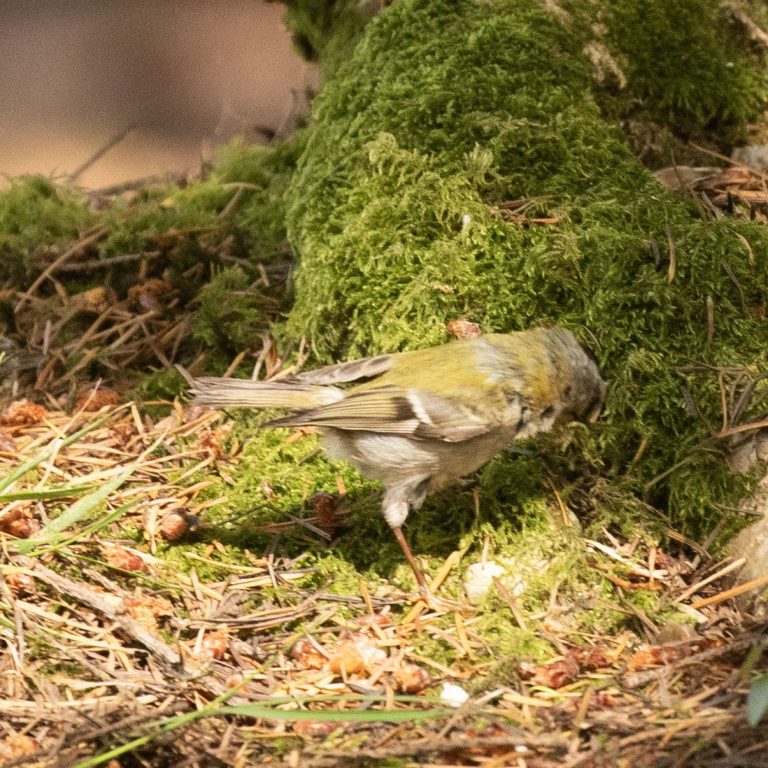
On Friday after a hearty breakfast, the group travelled up to the New Forest. The weather was bright and sunny, and we started off at Eyeworth Pond near Fritham where highlights included Nuthatch, Marsh Tit, Mistle & Song Thrush and Stonechat. Our next destination was Acres Down where we had our lunch, walked part way across the heath where we saw Common Buzzard, Siskin, Willow Warbler and more Stonechat. We then moved to Bolderwood and after an ice cream, we sat at some picnic tables and watched a pair of Firecrest plucking moss from the base of a tree to carry up to a nest they were building. A walk to the Fallow Deer Enclosure viewpoint gave us another pair of Firecrest and a Treecreeper. On the route back to the hotel. some of us went to Holt Heath near Ferndown to look for a male Red Footed Falcon. Sadly, we were not successful, but we did see Crossbill and a Cuckoo flew past. Our car had a Barn Owl over the road near Wareham. We had our evening meal followed by a get-together for a few drinks back at the hotel.
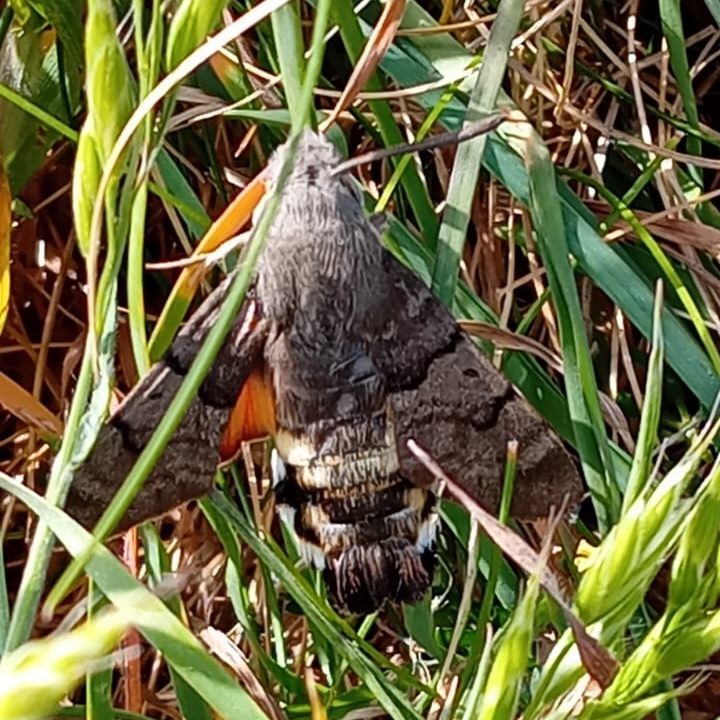
On Saturday, after another great breakfast, we travelled the brief distance to Durlston Country Park on the outskirts of Swanage. The weather was again hot & sunny but there was a gentle cooling breeze off the sea. On the walk down to the lighthouse, we had excellent views of Common Whitethroat and Linnet and along the clifftop walk highlights included Fulmar, Guillemot, Razorbill, Gannet, Shag and Rock Pipit. Paul also found a Hummingbird Hawkmoth. We drove the short distance to Arne RSPB reserve at the other end of Purbeck and had our lunch. We first had a walk over the road on Hyde’s Heath where we had excellent views of Dartford Warbler and very distant views of 2/3 White Tailed Eagle over towards the Wareham Channel. Sadly, the birds were flying away from us and didn’t come any nearer. There was some excitement amongst the group when a few saw a migrant Clouded Yellow butterfly much to the dismay of others. A further walk on Coombe Heath gave Tree Pipit, Little Egret and two Ospreys at a nest platform on Poole Harbour with one of the birds attempting to fish on the open water. We reconvened again at the Greyhound for our evening meal, followed by a little social gathering back at the hotel.
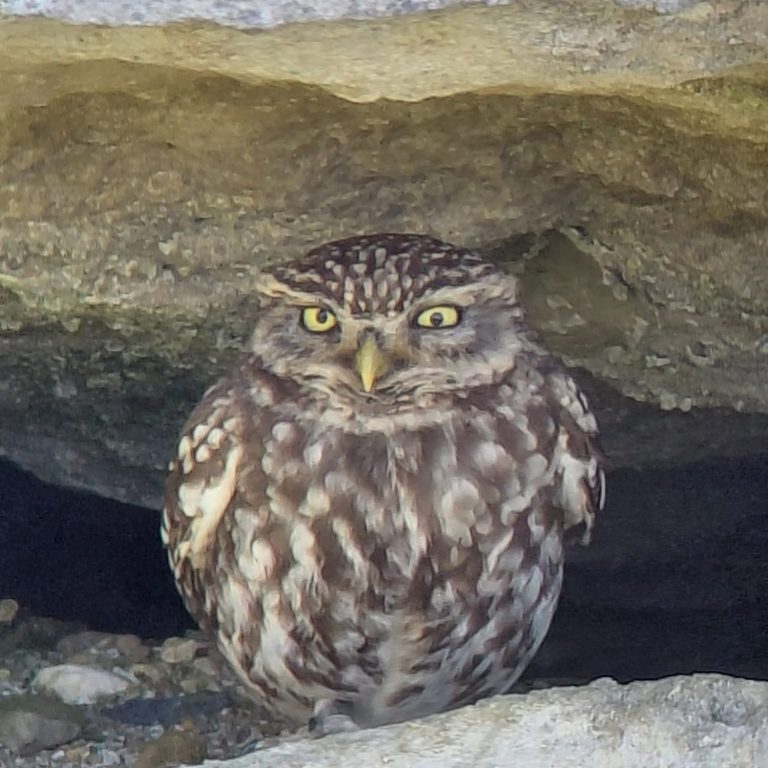
On the Sunday morning after yet another excellent breakfast, paying our dues and saying goodbye to the hotel we drove towards Weymouth and our first port of call was Portland Bill. A walk down to the headland gave us Wheatear, Fulmar, Gannet, Sandwich Tern, Guillemot and Razorbill and David found a single Puffin on the sea. We walked across the carpark to the little quarry by Portland Observatory where a single Little Owl was showing well on the quarry face and other highlights included Lesser Whitethroat, Goldfinch, Kestrel and Raven. We moved to Ferrybridge, had our lunch, followed by distant views from the Visitor Centre of Little Tern from the colony which is on the beach there together with Ringed Plover, Dunlin and Sanderling. Our final stop for the weekend was RSPB Radipole Lake in the centre of Weymouth. Highlights were few and far between here and the best birds were Cetti’s Warbler and Reed Bunting. On that note, mid-afternoon. we called it a day for the long journey home.
We had a great weekend, excellent accommodation, good food and good company. The weather was hot and sunny with wall-to-wall blue sky. Our final list of birds was 97.
Thanks to Paul Bebbington, Mike Whiteside and Judith Petch for photos
Ray Evans
Sunday 7th June 2026
Llangynog
The final trip of the weekend season was on Jun 7th to Llangynog just south-west of Oswestry in Powys and led by Paul. Four members including the leader met at the car park in the village at 09:00 am. Our destination was Cwm Glan-Hafon which is a valley off the trail which heads parallel to the River Tanat.
Birds flying around the village included Swift, Great Spotted Woodpecker, Siskin and a fly over Red Kite. Sadly, although the weather was sunny it was also very windy which caused many of the birds to take shelter. Willow Warblers were everywhere alongside Chiffchaffs. A few Redstarts were seen but none of the usual Welsh specialities put in an appearance. Turning into Cwm Glan-Hafon a Peregrine was calling from the rock face on Craig Rhiwarth. More Willow Warblers and Whitethroats were seen and heard, and several Stonechats were also heard and eventually seen.
Many flowers were in bloom and as a result Painted Lady, Red Admiral, Green Veined White butterflies were seen plus Small Heaths. Buzzards were flying over the Rock plus a Kestrel. On the way back to the village, Swallows and a Garden Warbler were seen. In the thirty years I have been going here this was the poorest return bird wise I have had, but such a beautiful place to be.
We returned to the car park and had lunch. We then headed for Llanymynech nature reserve just a little further down the A483. A Yellowhammer was seen just as we headed out to the next venue. Parking up in the car park we spent two hours wandering round the reserve listening to Willow Warblers and Blackcaps. It’s not a reserve that’s signposted from anywhere but affords the most stunning views of Shropshire, and straddles both Wales and England and is home to many species of rarer butterflies, none of which were flying today. Common Blues and Red Admirals were seen but again the birds were affected by the wind. Although birds were difficult to see, the two areas had stunning views and are well worth a visit
Paul Kenyon